

CERT-In Issues AI Security Audit Rules With 6-Hour Reporting
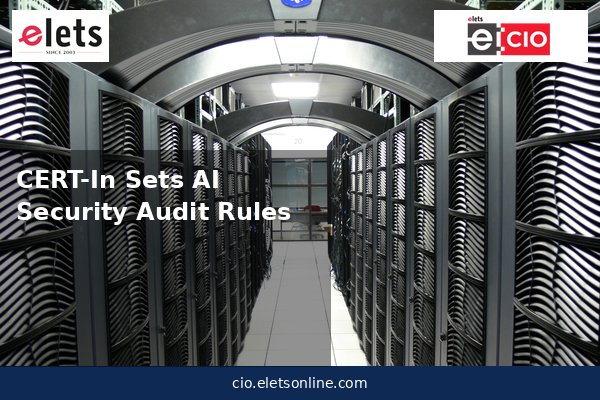
CERT-In has issued AI security audit guidelines that sort AI systems into four risk tiers and require AI incidents to be reported within six hours.
CERT-In has issued AI security audit guidelines that sort AI systems into four risk tiers and require AI incidents to be reported within six hours.

CERT-In has gained access to Anthropic’s unreleased Mythos AI model to find and fix system vulnerabilities, starting slowly over sensitive-data concerns.
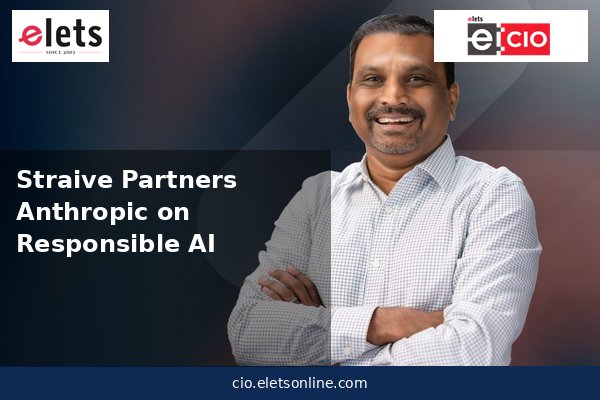
Straive and Anthropic partnered on 3 November 2026 to help enterprises build, deploy and run AI responsibly, with governance and human oversight built in.

Salesforce has added Agent Evals, API Evals, an Agent Kill Switch and hard budget limits to Agent Fabric, its cross-platform control plane for AI agents, so enterprises can catch failing or costly agents and take them offline before customers notice.
A tampered Claude Code extension was served through Cursor’s marketplace for nearly 11 hours on 29 October, attempting to install a persistent SSH backdoor on up to 5,000 developer machines, a warning for enterprises scaling AI coding tools.

Meeting in Atlanta on 31 October, the foreign ministers of India, the US, Japan and Australia said they intend to provide more than $85 million in technical and financial assistance to support access to trusted AI across the Indo-Pacific, and will launch an effort to spot semiconductor and AI hardware supply-chain chokepoints before they cause disruption.

OpenAI, Google, Microsoft and Anthropic will honour a single robots.txt signal that lets websites opt out of generative AI training, while Microsoft adds a separate grounding control. Indian publishers say it does not address content already used.

TRAI has proposed that telecom operators be held accountable for the AI they run, whether built in-house or bought from vendors, with board-approved AI policies, safety committees and mandatory reporting of serious AI failures.

MeitY’s draft DEPA for AI Training framework would let AI developers train models on sensitive data held by hospitals, banks and public agencies without the raw data ever leaving those institutions.
The Data Security Council of India’s discussion paper, AI Liability: Industry Guidance for Agentic AI, maps established legal doctrines onto autonomous AI systems and argues that each player in the value chain is responsible for what it could decide and had the tools to enforce.