



Article
Target’s India GCC Is Engineering the Future of Global Retail
Target’s India GCC Is Engineering the Future of Global Retail
![]() By cioNetworks - 16 November 2026


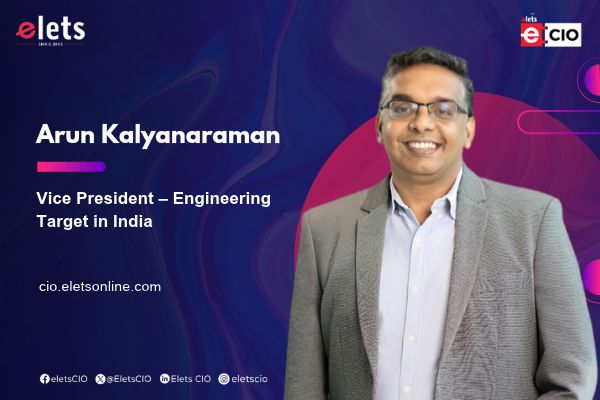
Target’s India engineering centre has evolved into a strategic hub driving technology innovation and enterprise-wide transformation for the global retailer. In this interaction, Arun Kalyanaraman, Vice President – Engineering, Target in India, speaks with Abhineet Kumar of Elets News Network about the evolution of the Core Commerce Engineering team, the growing role of AI and data in retail, cross-border collaboration, and the changing mandate of Global Capability Centres (GCCs) in shaping the future of retail.
You’ve been at Target for over a decade, starting as Director of Technology in 2013. Can you share a bit about your journey at Target and what the ‘Core Commerce Engineering’ team encompasses?

I have been with Target for 13 years, having joined in 2013. Over the years, I have held various technology leadership positions across engineering teams, driving technology transformation, building high-performing global teams, and delivering innovative, enterprise-scale solutions. The opportunity to innovate and drive impact across the enterprise, along with a culture that supports growth and learning, has been one of the reasons I have stayed here for so long. I currently lead Core Commerce, the team responsible for building guest (customer)-facing transactional technology platforms at Target. We aim to build technology that is easy to use for our guests, supported by robust and scalable technology foundations.

How has the scope and mandate of the India engineering centre evolved since Target’s inception?

Target has been in India for over 21 years, driving business transformation through technology-powered, innovative retail solutions. Our engineering teams build, scale, and own platforms that have a global business impact. Engineers have end-to-end ownership of technology products, enabling them to shape product roadmaps, solve meaningful business problems, and deliver measurable outcomes rather than simply shipping features.
This impact is accelerated by the fact that we operate as a multidisciplinary team, bringing together our business, technology, product, data, and UX capabilities. From building industry-leading data platforms to enabling optimal fulfilment strategies, designing new stores, offering personalised shopping experiences, and creating seamless checkout experiences, our teams help shape the future of retail through technology- and AI-enabled solutions.
Leading cross-functional teams across geographies in a matrixed environment comes with real coordination challenges. What practices have you found most effective for aligning priorities between the India GCC and Target’s US teams?
The most effective way to align globally distributed teams is by ensuring they are united by a common purpose and accountable for shared business outcomes rather than isolated deliverables. When teams understand the ‘why’ behind what they are building, they are better equipped to make decisions independently while staying aligned with broader organisational goals.
Equally important is fostering cross-functional collaboration across teams. Bringing diverse perspectives together helps teams solve problems more holistically, make faster decisions, and deliver solutions that create meaningful business impact for our guests, business partners, and team members.
How is Target in India leveraging AI, cloud, and data platform capabilities to support the future of retail?
We’ve evolved from using AI to run our operations to using it to elevate the guest experience, support our team, and drive speed and efficiency across all our operations, from our supply chain and inventory management systems to applications at checkout counters in our stores, on Target.com, and on the Target app.
With AI, we can be bolder, experiment more, and progress through our roadmap much faster. It’s not AI for the sake of AI. We’re strengthening our foundations so that we can apply the right AI in the right places. At the same time, our team remains a critical part of our business. We’re focused on investing in AI that helps our team work smarter, move faster, and create space for greater human creativity and collaboration.
How do you expect the relationship between global headquarters and GCCs to evolve over the next five years, particularly in industries such as retail, where speed, scale, and customer experience are critical differentiators?
As one of the early GCCs in India, we have seen the role of GCCs evolve over the years from cost-arbitrage centres to execution and delivery centres, and now to strategic drivers of transformation and enterprise value. As part of this evolution, the breadth of capabilities offered by GCCs has expanded beyond technology, now extending to high-impact functions that drive business value.
At Target in India, our journey reflects this evolution. We have been on a remarkable journey, delivering a broad spectrum of services. Today, our ability to collaborate and fully leverage connected capabilities across all business areas positions our team in India to drive incremental value for Target, something we are immensely proud of. We are unique in offering multidisciplinary capabilities and operating as an integrated headquarters to deliver technology-powered, innovative retail solutions at scale across the retail value chain.
Also Read: Generative AI Is Changing Cybersecurity Faster Than Most Organizations Realize
As Bengaluru becomes an increasingly strategic hub for global capability centres, how are you approaching building and retaining high-performing engineering talent there, and what differentiates Target’s GCC culture from others in the market?
Talent retention comes back to some of the points we discussed earlier: creating an environment where people are trusted with ownership, encouraged to experiment, and supported in continuous learning. Engineers perform at their best when they have the autonomy to make technical decisions while also being accountable for business outcomes.
Equally important is fostering a culture of learning through mentorship, hackathons, innovation forums, and hands-on problem-solving. Cross-functional collaboration further enriches the engineering experience by giving teams greater exposure to the business and enabling them to build end-to-end solutions. Ultimately, a culture that combines ownership, learning, and collaboration is what drives sustained innovation and keeps engineering talent engaged.
Be a part of Elets Collaborative Initiatives. Join Us for Upcoming Events and explore business opportunities. Like us on Facebook , connect with us on LinkedIn and follow us on Twitter.
"Exciting news! Elets technomedia is now on WhatsApp Channels Subscribe today by clicking the link and stay updated with the latest insights!" Click here!