


Article
Beyond the Hype: The Room Where AI’s Next Chapter Takes Shape
Beyond the Hype: The Room Where AI’s Next Chapter Takes Shape
![]() By Elets News Network - 22 September 2026
By Elets News Network - 22 September 2026


Artificial intelligence is entering a stage where the biggest questions are no longer limited to what the technology can do. The conversation is increasingly about where AI is headed, who gets to shape that direction, how it can be deployed responsibly, and how its benefits can reach businesses, governments, and citizens at scale. As generative AI, large language models, and agentic systems continue to evolve, the boundaries between technology, policy, business, and society are becoming increasingly difficult to separate.
This is creating a new kind of AI conversation, one that cannot be led by a single industry or a single group of experts. The people building AI need to hear from those deploying it. Policymakers need to understand how quickly the technology is evolving. Investors need to identify where genuine innovation is taking place, while enterprises need to distinguish between experimentation and solutions that can create lasting value.
The future of AI, in other words, is becoming an ecosystem conversation.
And that is exactly where the World AI Summit 2026 finds its purpose.
Beyond the AI Hype
The past few years have brought an extraordinary amount of excitement around artificial intelligence. Generative AI has changed how people interact with technology, large language models have opened new possibilities for knowledge and productivity, and AI agents are beginning to move from answering questions to performing tasks and supporting decision-making.
Yet the next phase of AI will be defined by what happens after the excitement.
Businesses are asking how AI can be integrated into existing systems without creating new operational and security risks. Governments are exploring how artificial intelligence can strengthen public services while protecting citizens and maintaining accountability. Startups are looking for ways to move promising ideas from prototypes to scalable products. Researchers are pushing the boundaries of models and computing, while investors are searching for technologies capable of creating long-term value. These are not separate conversations. They are closely connected.
An AI model needs infrastructure to run, data to learn from, organisations willing to deploy it, capital to scale it, and policy frameworks that establish trust. Bringing these elements together is therefore becoming just as important as developing the technology itself.
The World AI Summit 2026 is built around this wider view of artificial intelligence, positioning itself as a platform where the different parts of the ecosystem can come together to explore what comes next.
One Summit, Multiple Perspectives
The strength of an AI ecosystem lies in the diversity of people contributing to it. A policymaker sees AI through the lens of public interest and governance. A startup founder sees it through the lens of innovation and market opportunity. An enterprise technology leader is concerned with implementation, data, and business outcomes, while an investor is looking at scalability and the next generation of technology companies.
Each perspective is different, but each is necessary.
The World AI Summit 2026 brings these groups together through a programme designed to look at artificial intelligence from multiple angles. The summit is expected to bring together 1,200+ delegates, 100+ speakers and 50+ startups, creating a broad platform for interaction between technology leaders, policymakers, innovators, researchers, investors and entrepreneurs.
This diversity is particularly important at a time when AI is moving into areas that directly affect everyday life. From financial services and healthcare to retail, manufacturing, public administration and digital infrastructure, AI is increasingly becoming part of systems that millions of people depend upon.
The question is no longer whether AI will influence these sectors. The more important question is how that influence will be shaped.
Tracks Mapping the AI Landscape
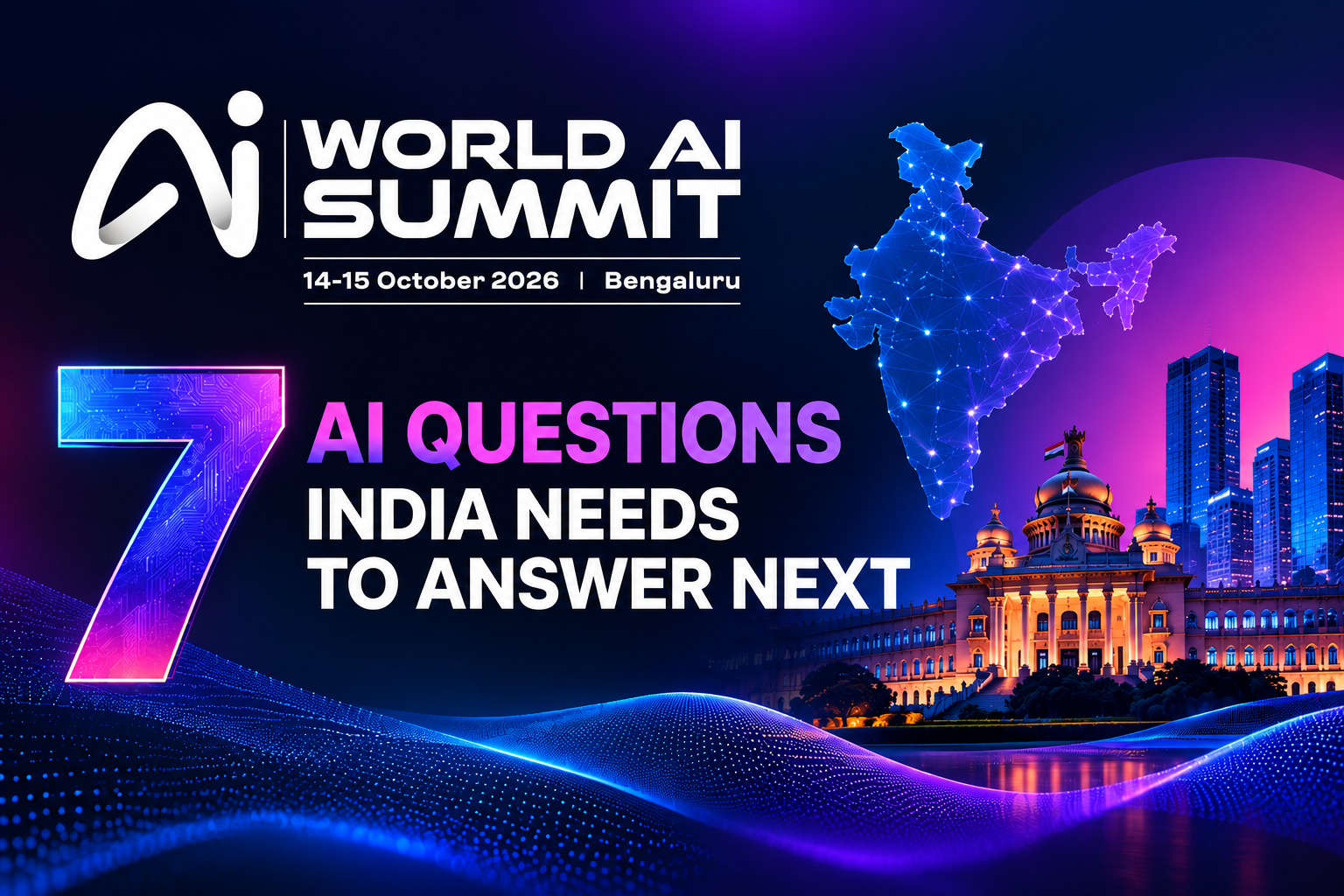
The World AI Summit 2026 reflects this changing landscape through seven thematic tracks: Generative AI & LLMs, AI Agents and Agentic AI, AI Infrastructure & Cloud, AI in Enterprises, AI in Government & Public Services, Global Capability Centers (GCCs) and AI Ethics & Regulation.
Together, these tracks offer a picture of where the AI conversation is heading.
Generative AI and LLMs remain at the heart of the current transformation, but the focus is increasingly moving towards practical applications and real-world use cases. The rise of AI agents introduces another layer, with autonomous systems beginning to influence workflows, decision-making, and how organisations interact with technology.
At the same time, none of this can happen without infrastructure. Computing capacity, cloud platforms, chips, data architecture, and scalable AI systems form the foundation on which the next generation of applications will be built.
Enterprise adoption brings another set of questions. Organisations need to understand how AI can become part of operations, customer experiences and strategic decision-making while maintaining security, reliability and accountability.
For governments, the opportunity is equally significant. AI can support data-driven policymaking, citizen services and public infrastructure, but its adoption must remain transparent, inclusive and focused on public value.
And running across all of these areas is the question of ethics and regulation. As AI becomes more powerful, trust cannot remain an afterthought. Responsible development, transparency, safety, privacy, and accountability will increasingly determine whether people are willing to adopt and depend upon AI systems.
Where Policy Meets Innovation
One of the most important conversations at the summit will be the relationship between innovation and policy.
Technology often moves faster than regulation, creating a challenge for governments around the world. Policies need to protect citizens and establish accountability without unnecessarily slowing down experimentation and innovation. At the same time, innovators need clarity around the rules within which they are expected to operate.
India’s AI journey makes this conversation especially significant. The country is building AI capabilities while also developing the infrastructure, talent, datasets and institutional frameworks needed to support adoption at scale.
The idea of responsible AI therefore cannot exist separately from the idea of inclusive AI. Technology that is powerful but inaccessible, or innovative but disconnected from local realities, cannot deliver its full potential.
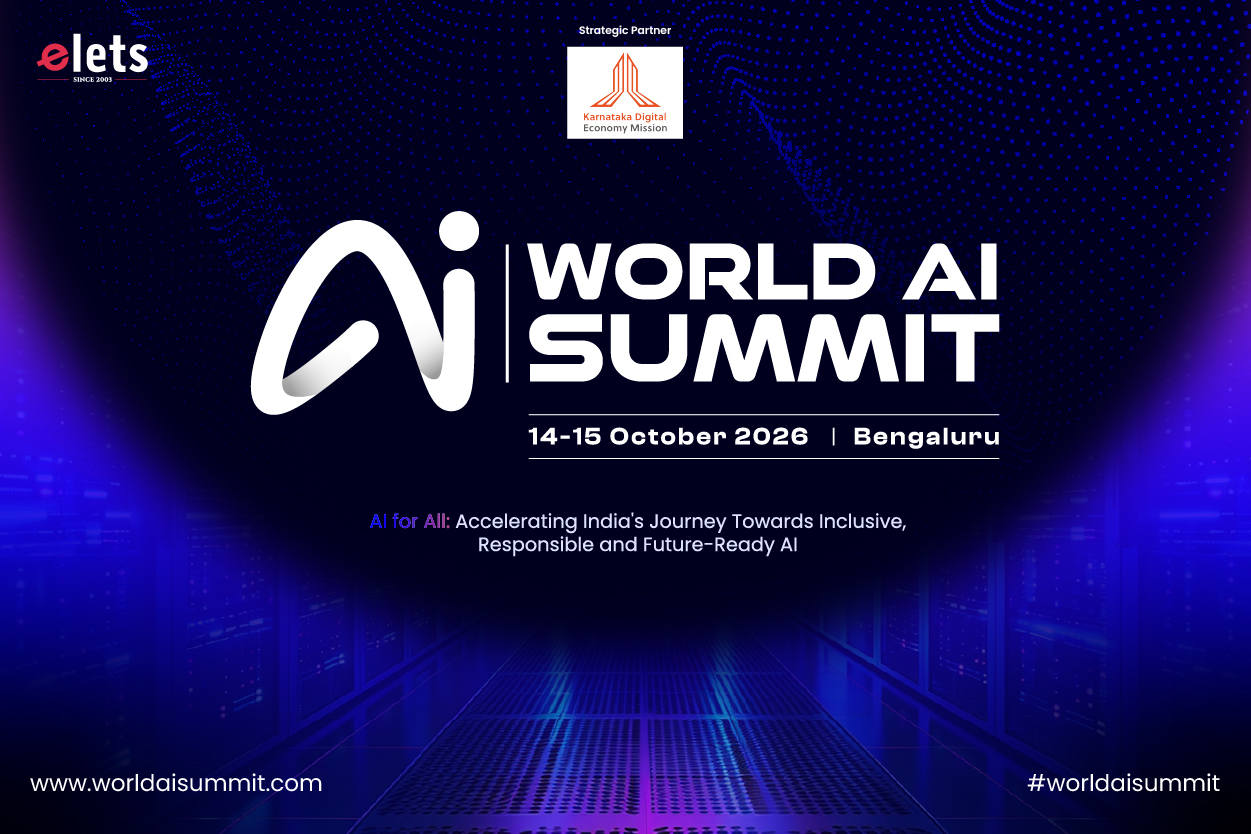
The summit’s emphasis on “AI for All” reflects this broader ambition. Its 2026 theme, “AI for All: Accelerating India’s Journey Towards Inclusive, Responsible and Future-Ready AI,” places inclusion and responsibility alongside technological progress.
That combination is important because India’s AI opportunity is not simply about competing in the global technology race. It is also about developing solutions that work across different languages, sectors, communities and levels of digital access.
From Startup Ideas to Scalable Innovation
Startups have an important role to play in this transformation. Some of the most interesting AI applications are likely to emerge from young companies willing to experiment with new business models, specialised models and industry-specific solutions.
But a good idea is only the beginning.
AI startups need access to customers, capital, infrastructure, technical talent and experienced partners. They also need opportunities to demonstrate that their technology can solve an actual problem rather than simply produce an impressive demonstration.
This makes interaction between startups, investors, enterprises and policymakers particularly valuable.
The World AI Summit 2026 is designed to create those connections. Its attendee ecosystem includes AI startups and entrepreneurs, investors and venture capitalists, technology vendors, researchers, government officials, policymakers and senior technology leaders such as CIOs, CTOs and CDOs.
For a startup, a conversation at the summit could lead to an enterprise pilot, a new investor relationship or a strategic partnership. For an enterprise, it could mean discovering a technology capable of addressing a challenge that has remained unresolved. For investors, it offers an opportunity to understand the people and technologies shaping the next phase of AI.
This is where an event becomes more than a series of sessions. It becomes an ecosystem in motion.
Bengaluru: A Natural Setting for the Conversation
The choice of Bengaluru as the host city adds another dimension to the summit.
For decades, Bengaluru has been closely associated with India’s technology and innovation story. It has brought together global technology companies, startups, research institutions, engineering talent, and investors, creating an environment where ideas can move from laboratories and campuses into businesses and markets.
The AI era is creating a new opportunity for that ecosystem.
Bengaluru is now home to conversations around enterprise AI, cloud infrastructure, data, semiconductor technologies, AI research, startups and digital innovation. The city therefore provides a natural setting for a summit focused not only on where AI is today, but on where the technology can go next.
The World AI Summit’s broader positioning reflects this ambition. Its official programme describes the summit as a global platform bringing together policymakers, innovators, industry leaders, AI experts, entrepreneurs and investors to explore the transformative potential of AI across sectors.
The significance of Bengaluru is therefore not simply geographical. It is about bringing a global AI conversation into one of the world’s most active technology ecosystems.
The Value of What Happens Between Sessions
A summit is often remembered for its keynote speakers and headline discussions, but some of its most valuable outcomes can happen away from the main stage.
A founder speaking to an investor over coffee can be as important as a formal pitch. A government official discussing an implementation challenge with a technology provider can open the door to a new solution. A researcher meeting an enterprise leader can turn an academic idea into a practical application.
These interactions are difficult to measure, but they are often what gives an industry gathering its long-term value.
The World AI Summit places considerable emphasis on networking, curated roundtables and masterclasses alongside its main-stage programme. The summit also highlights live demonstrations, launches, Q&A sessions and one-to-one interactions as part of the overall experience.
For an ecosystem as rapidly changing as AI, these connections matter because no organisation has all the answers. Progress often comes from finding the right person with a different piece of the puzzle.
Recognising AI That Creates Real Impact
The conversation around artificial intelligence can sometimes become dominated by new models, benchmarks and announcements. But the real measure of AI is increasingly becoming its impact outside the technology itself.
Is it improving a public service? Is it helping an organisation make better decisions? Is it creating a new business opportunity? Is it solving a problem that previously seemed too complex or expensive to address?
The World AI Awards 2026 will bring this focus on real-world impact into the summit, recognising applications of AI across business innovation, public-sector transformation, startups, leadership and technology platforms.
The awards provide an opportunity to recognise the people and organisations demonstrating that AI is not simply a future technology. It is already being applied to solve problems, improve services and create new possibilities.
That distinction will become increasingly important as the AI ecosystem matures.
Building an AI Future That Includes Everyone
The most interesting question about artificial intelligence is perhaps not what the technology will look like five or ten years from now. It is what kind of society and economy we will build around it.
India has the opportunity to approach AI from a distinctive position. It has a large and diverse population, a rapidly expanding digital economy, a strong technology workforce, and experience in building digital infrastructure at population scale. These strengths can help India contribute not only to the development of AI but also to the global conversation about how AI should be made accessible, responsible, and useful.
That requires dialogue between sectors that have traditionally operated separately.
Technology companies need policymakers. Startups need investors and customers. Enterprises need innovators. Governments need technology partners. Researchers need opportunities to test ideas in the real world. And all of them need to remain connected to the people ultimately affected by these technologies.
This is the conversation that the World AI Summit 2026 seeks to bring into focus.
Where the Next AI Conversation Begins
The next chapter of artificial intelligence will be shaped by technology, but it will also be shaped by the people deciding how that technology is built, funded, governed, and adopted. The most meaningful progress will come when innovation is connected to real needs and when technological ambition is matched by responsibility.
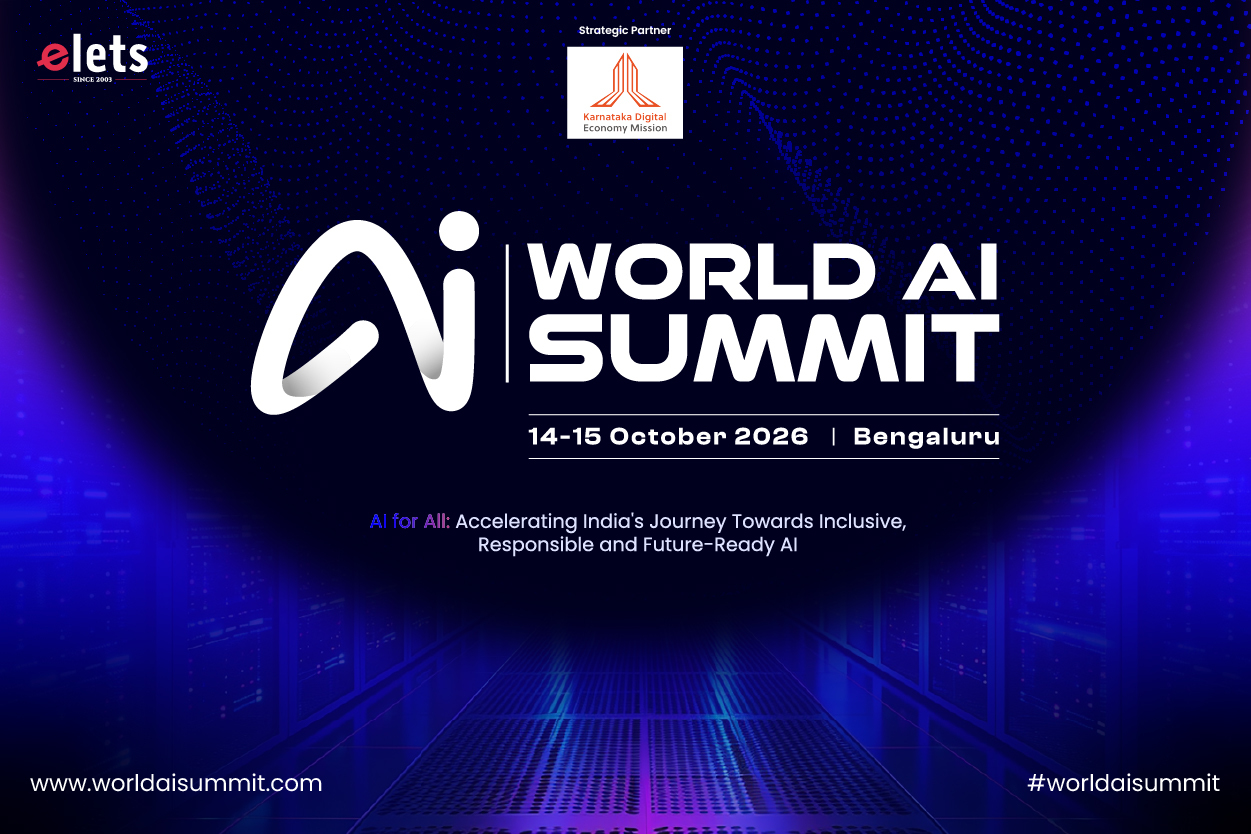
On 14–15 October 2026, the World AI Summit 2026 will bring this wider AI ecosystem together at the Sheraton Grand Bangalore Hotel at Brigade Gateway in Bengaluru. With its focus on generative AI and LLMs, agentic AI, infrastructure, enterprise adoption, government services and responsible AI, the summit aims to create a space where ideas can move beyond discussion and towards collaboration, innovation and implementation.
In a field changing as quickly as artificial intelligence, knowing what is happening is no longer enough. The greater opportunity lies in being part of the conversation that helps decide what happens next.
For More Updates, visit: https://www.worldaisummit.com/
Be a part of Elets Collaborative Initiatives. Join Us for Upcoming Events and explore business opportunities. Like us on Facebook , connect with us on LinkedIn and follow us on Twitter.
"Exciting news! Elets technomedia is now on WhatsApp Channels Subscribe today by clicking the link and stay updated with the latest insights!" Click here!