



artificial intelligence
Sanskriti AI Search Unifies 65 Culture Ministry Portals
Sanskriti AI Search Unifies 65 Culture Ministry Portals
![]() By Elets News Network - 17 November 2026



The Union Ministry of Culture launched Sanskriti, an AI search engine and conversational assistant on its main website, culture.gov.in, on 16 November 2026. The Sanskriti AI search tool pulls answers only from about 65 portals run by the ministry and its institutions, works in all 22 scheduled Indian languages and needs no login.
Culture Secretary Vivek Aggarwal told reporters in New Delhi that the ministry’s 43 organisations each run separate, unconnected websites, so a citizen looking for a manuscript or an art form had to visit several portals. It builds on the ministry’s earlier work to use AI to digitise one crore manuscripts under Gyan Bharatam.

How the Sanskriti AI search works
According to the ministry’s press note, the platform combines natural language processing, embeddings, a knowledge graph and retrieval-augmented generation (RAG) to understand intent rather than match keywords. It is built on open-source foundation models and is LLM-agnostic, so the ministry can later move to Indian sovereign AI models.

- Answers come in two layers: a short quick answer first, then a detailed explanation.
- Every statement carries a numbered citation that opens the exact ministry page it came from.
- For the largest databases, including Gyan Bharatam, Abhilekh Patal, the Indian Culture portal and Mera Gaon Meri Dharohar, it queries the portal live at the moment of asking.
- It understands follow-up questions and adds photographs, artefacts and documents from the portals.
- Built with Bhashini, the national language platform, it takes voice input and reads answers aloud, which helps people with low literacy or visual impairment.
Union Culture and Tourism Minister Gajendra Singh Shekhawat announced the launch on X. Details were also reported by All India Radio News.

Grounded answers, built on-premises
The ministry says the assistant never draws on the open internet and states plainly when material is thin, instead of guessing. Aggarwal said a vendor chosen through a tender built the system, work started about a year ago, and it runs on-premises, with data stored and processed locally.
“It does not hallucinate the information… if you do an AI search, it is random. It can pick up from the entire internet. But this information is picked only from the Ministry of Culture portals,” Aggarwal said, according to ThePrint.
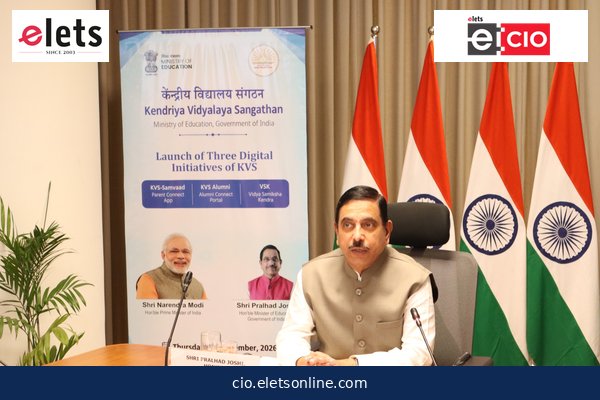
Users will be able to flag wrong information, and Aggarwal said a common search would also expose outdated institutional pages to the ministry. The approach mirrors other government deployments such as the KVS Samiksha AI bot for Kendriya Vidyalayas.
What comes next: AI to track stolen antiquities
Sanskriti is the ministry’s second AI platform after Gyan Bharatam. In March 2026, version 2.0 of the Indian Culture Portal added AI search and a chatbot named Bharti. Aggarwal listed three further uses under consideration: cataloguing museum objects, a visual library of stolen antiquities and more work on Gyan Bharatam.
When a stolen object surfaces at an auction, India must quickly prove it is the same piece. “You have to compare the dimensions, the exact indentations… This kind of comparison can be done by use of AI,” Aggarwal said, adding that physical verification would still be needed for the legal process.
Why it matters for public-sector CIOs
Sanskriti offers a working template for ring-fenced generative AI in government: retrieval over a fixed set of official sources, citations on every claim, on-premises hosting and a model layer that can be swapped. That approach fits the wider push for sovereign AI moving into deployment, and the multilingual voice layer follows services such as Bharat-VISTAAR’s Telugu AI advisory for farmers.
Key takeaways
- The Ministry of Culture launched the Sanskriti AI search and chatbot on culture.gov.in on 16 November 2026.
- It answers only from about 65 ministry portals, with numbered citations, in 22 languages through Bhashini.
- The ministry plans to use AI next to build a visual library of stolen antiquities and catalogue museum objects.
FAQ
What is Sanskriti AI search?
It is an AI-powered semantic search engine and chatbot from the Ministry of Culture that answers questions on Indian culture and heritage using only the ministry’s own portals.
Where can I use Sanskriti and is a login needed?
It sits on culture.gov.in, through the search bar or a chat toggle at the bottom right of the page. No login or registration is needed.
Featured image: Inner courtyard of the National Museum, New Delhi, an institution under the Ministry of Culture (file photo). Photo: DesiBoy101 via Wikimedia Commons (CC BY-SA 4.0)
Be a part of Elets Collaborative Initiatives. Join Us for Upcoming Events and explore business opportunities. Like us on Facebook , connect with us on LinkedIn and follow us on Twitter.
"Exciting news! Elets technomedia is now on WhatsApp Channels Subscribe today by clicking the link and stay updated with the latest insights!" Click here!