


artificial intelligence
India Signs Pax Silica Pact to Protect AI Supply Chains
India Signs Pax Silica Pact to Protect AI Supply Chains
![]() By Elets News Network - 16 November 2026


India has signed the San Francisco Declaration on the Secure Foundations of Enduring Prosperity, a new agreement under the US-led Pax Silica initiative to protect the technologies and supply chains behind artificial intelligence. The Financial Times reported the signing on 15 November 2026, citing US Under Secretary of State for Economic Affairs Jacob Helberg.
According to Helberg, India signed alongside South Korea, Qatar and the United Arab Emirates, joining the United States, Japan, Australia, Israel and the United Kingdom. Germany, Sweden, the Netherlands and the European Commission were expected to sign the following week. The move follows the Quad’s recent pledge of over $85 million for trusted AI across the Indo-Pacific.
What the San Francisco Declaration commits to
The signatories have agreed to draw up a joint list of critical technologies and supply chains that underpin AI and need greater protection, according to the FT report as carried by ANI and other outlets. Reported elements of the declaration include:
- Identifying sensitive AI technologies and critical infrastructure that need protection on security grounds.
- Sharing information on where supply chains most urgently need to be diversified.
- Stronger safeguards against theft or illicit transfer of advanced technologies that could give a rival a military or intelligence edge.
- Working groups on AI supply-chain vulnerabilities, and economic hubs to attract investment into the sectors involved.
“The know how to design a chip, the machine that makes it and the port that ships it can all be in different countries,” Helberg told the FT. “What makes the San Francisco Declaration historic is that Pax Silica partners have agreed to treat the security of those technologies and the infrastructure behind them as a shared responsibility,” he added.
What is Pax Silica?
Pax Silica is the US State Department’s flagship initiative on AI and supply-chain security. It was launched in December 2025, when Helberg and a first group of partners including Japan, South Korea, Singapore, Israel and Australia signed the original Pax Silica Declaration. The State Department’s Pax Silica page describes a scope that runs from critical minerals and energy to advanced manufacturing, semiconductors, AI infrastructure and logistics, and lists India among the signatories of that first declaration.
The San Francisco Declaration is a narrower, second step taken by a smaller group of partners. Its full text was not on the State Department’s Pax Silica page at the time of writing, and the reports so far rest on Helberg’s account to the FT. The agreement also comes days before US President Donald Trump is due to meet Chinese President Xi Jinping at the APEC summit in Shenzhen.
Why Pax Silica matters for India’s AI build-out
For Indian technology leaders, the issue is practical. The country’s public compute programme depends on the same hardware: C-DAC’s IndiaAI Mission tender for up to 10,000 AI compute units covers H100 and H200-class GPUs. India is also adding domestic chip capacity, including Tata’s semiconductor plant in Assam.
The declaration fits a wider pattern of India-US cooperation on trusted technology. At the Quad foreign ministers’ meeting on 31 October, the four partners also agreed to map semiconductor and AI hardware chokepoints, and Washington announced $10 million for critical minerals recycling in India and ASEAN countries. For CIOs, a shared list of protected technologies could shape vendor choices and data-centre sourcing, building on India’s path from digital public infrastructure to AI leadership.
Key takeaways
- India has signed the San Francisco Declaration, part of the US-led Pax Silica initiative on AI supply chains.
- Signatories will build a joint list of critical AI technologies and supply chains that need greater protection.
- South Korea, Qatar, the UAE, Japan, Australia, Israel and the UK also signed, with more European partners expected.
FAQ
What is the San Francisco Declaration?
It is an agreement under the US-led Pax Silica initiative in which partner countries commit to jointly identify and protect the critical technologies and supply chains behind AI.
Has India joined Pax Silica?
Yes. The US State Department lists India as a signatory of the Pax Silica Declaration, and India has now also signed the San Francisco Declaration.
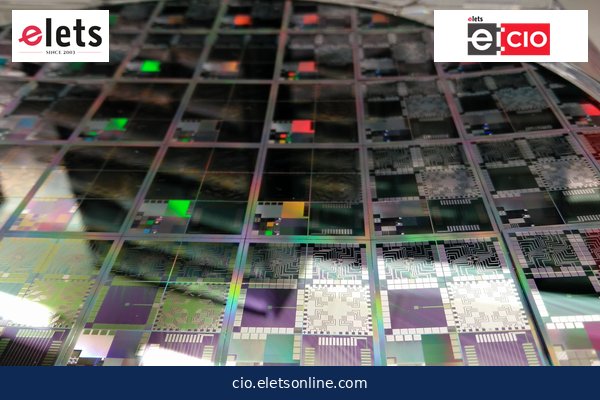
Featured image: A 12-inch semiconductor wafer of microelectronic test chips (file photo). Photo: DrHughManning via Wikimedia Commons (CC BY-SA 4.0)
Be a part of Elets Collaborative Initiatives. Join Us for Upcoming Events and explore business opportunities. Like us on Facebook , connect with us on LinkedIn and follow us on Twitter.
"Exciting news! Elets technomedia is now on WhatsApp Channels Subscribe today by clicking the link and stay updated with the latest insights!" Click here!