


artificial intelligence
Astrome AI-ELINT Constellation Gets ₹64.05 Crore From TDB
Astrome AI-ELINT Constellation Gets ₹64.05 Crore From TDB
![]() By Elets News Network - 15 November 2026


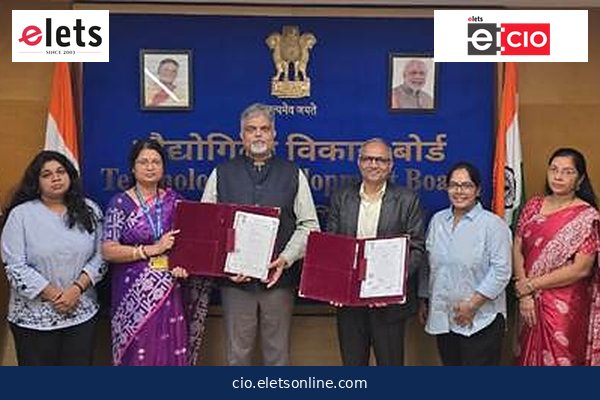
The Astrome AI-ELINT constellation, a planned network of artificial intelligence-enabled electronic intelligence satellites, has won ₹64.05 crore in government support. The Technology Development Board (TDB) under the Department of Science and Technology (DST) signed the agreement with Bengaluru-based Astrome Technologies Pvt Ltd on 12 November 2026, according to the Ministry of Science and Technology.
The money comes from the Research, Development and Innovation (RDI) Fund as Optionally Convertible Debt and covers half of the ₹128.11 crore project cost. It adds to a growing pipeline of public money for AI in space, after IN-SPACe picked six space startups for AI seed grants last month.
What the Astrome AI-ELINT constellation will do
Electronic intelligence (ELINT) satellites detect and analyse radio-frequency signals rather than take pictures. According to TDB, the project is meant to give India a sovereign, space-based intelligence capability for national security applications. It combines three technology pieces:
- An ELINT payload to detect and analyse signals across a broad frequency range
- AI-based ground processing software to analyse the data the satellites collect
- Inter-satellite communication links so the satellites can share data and work as one network
Astrome plans to build 50 kg-class microsatellites for low Earth orbit and deploy them in stages. TDB said coverage and revisit frequency will improve as more satellites join the constellation, supporting persistent surveillance of identified areas of interest.
From lab prototype to flight-ready
The funding is meant to take the core systems from Technology Readiness Level (TRL) 4, where components are validated in a laboratory, to TRL 9, where a system is proven in actual operation. That covers engineering, integration, testing and validation work. TDB classed the project as deep technology, with space technology as its sub-sector.
TDB Secretary Rajesh Kumar Pathak said building such complex platforms needs sustained innovation, rigorous validation and long-term investment, and that the RDI Fund is backing Indian enterprises working on frontier technologies that can strengthen the country’s strategic capabilities. An Astrome representative said the support would speed up the development and integration of the company’s indigenous ELINT payloads, AI-based data processing and inter-satellite links.
Why it matters for sovereign AI in defence
The deal is a clear example of AI being built into national security systems that India wants to own end to end. It follows reports that the government may push indigenous AI models in defence and critical sectors, and the Sarvam AI and HQ Integrated Defence Staff pact to build sovereign AI for the armed forces.
Founded in 2015, Astrome is better known for millimetre-wave wireless and satellite communication products. Its website already lists CubeInt, an ELINT/SIGINT constellation that uses signal processing and AI/ML; TDB’s release does not say whether the funded project is the same programme. Private space defence firms are also drawing capital, as Digantara’s $50 million round for space-based missile defence showed.
Key takeaways
- TDB signed a ₹64.05 crore RDI Fund agreement with Astrome Technologies on 12 November 2026, half of the ₹128.11 crore project cost.
- The constellation pairs ELINT payloads on 50 kg-class satellites with AI-based ground processing and inter-satellite links.
- The project aims to move the technology from TRL 4 to TRL 9 for national security use.
FAQ
What is an AI-ELINT satellite constellation?
It is a group of satellites that pick up and analyse electronic signals from space, with AI software on the ground processing the data they collect.
How is the Astrome project funded?
TDB is providing ₹64.05 crore from the RDI Fund as Optionally Convertible Debt towards a total project cost of ₹128.11 crore.
Where will the satellites operate?
The 50 kg-class microsatellites are designed for low Earth orbit and will be deployed progressively to widen coverage.
Featured image: Officials of the Technology Development Board and Astrome Technologies at the signing of the RDI Fund agreement. Photo: PIB / Technology Development Board (official image)
Be a part of Elets Collaborative Initiatives. Join Us for Upcoming Events and explore business opportunities. Like us on Facebook , connect with us on LinkedIn and follow us on Twitter.
"Exciting news! Elets technomedia is now on WhatsApp Channels Subscribe today by clicking the link and stay updated with the latest insights!" Click here!