



artificial intelligence
India Weighs Pre-Release Safety Checks for Frontier AI Models as Government Readies New AI Law
India Weighs Pre-Release Safety Checks for Frontier AI Models as Government Readies New AI Law
![]() By Elets News Network - 28 October 2026


India’s forthcoming artificial intelligence law could treat the world’s most powerful AI systems differently from everyday AI applications, with developers potentially required to show that adequate safeguards are in place before releasing models capable of causing serious harm. According to a report by NDTV citing officials familiar with the discussions, the government is examining a separate safety framework for so-called frontier models as it prepares a consultation paper on AI regulation.
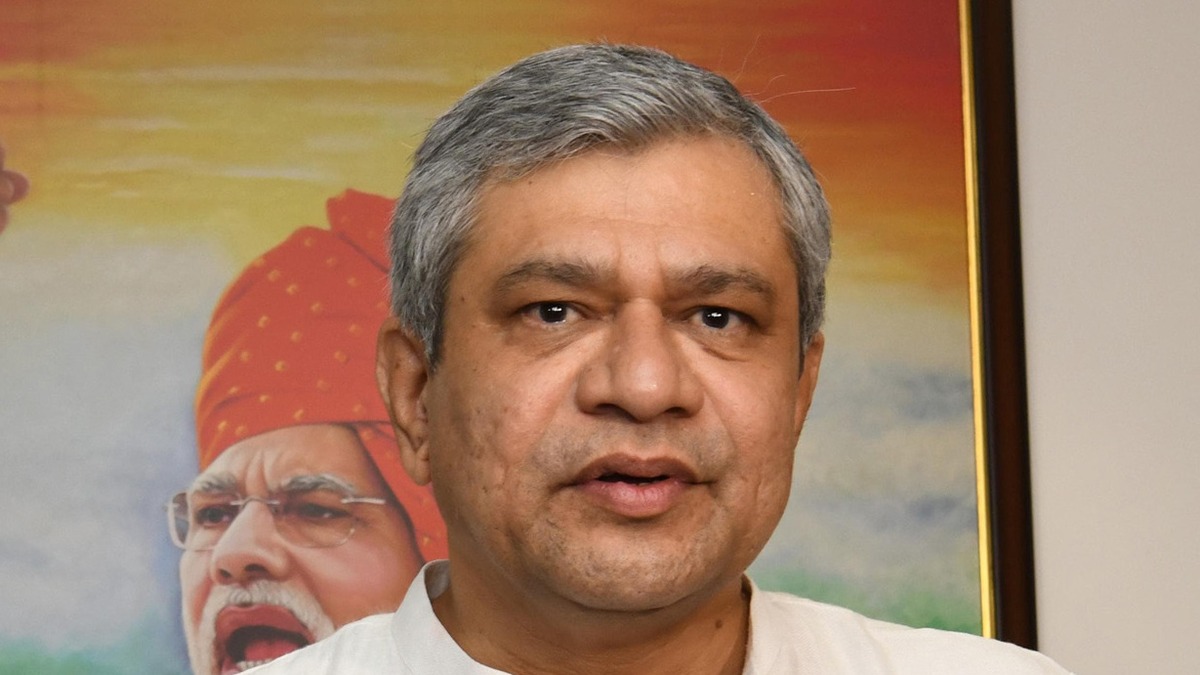
Union Electronics and IT Minister Ashwini Vaishnaw has said the consultation paper will be released in the coming weeks and will invite views from industry, civil society, citizens and other stakeholders. If adopted, a frontier-model regime would mark a clear shift from India’s largely incremental, technology-neutral approach towards closer scrutiny of the most advanced systems.
Testing before release
Among the options reportedly under discussion are pre-release evaluations, testing in controlled environments and safeguards proportionate to what a model can do. One approach would require developers of particularly capable models to run them in a sandbox before wider deployment, giving researchers a chance to study behaviour and identify vulnerabilities first. Officials described this as “a vetting process before it rolls out”.
The government could also consider whether developers should restrict certain functions, limit access for specific users, or apply different safeguards depending on the level of risk a model poses. The exact obligations, and which models they would cover, would be settled through the legislative process.
Defining a frontier model is expected to be one of the hardest questions. A threshold based on the computing power used in training is one possibility, but officials acknowledge that compute alone may not capture every risk, so capability-based assessments may also be needed.
Why the government is looking beyond content rules
So far, India has largely relied on existing laws, the IT Intermediary Rules of 2021 and targeted directions on deepfakes and synthetic content to address AI-related harms. The new law could go further by examining the systems that generate content, not just the content that platforms distribute.
Officials pointed out that India, unlike the United States, cannot rely on executive powers in the absence of legislation, so any safeguards for advanced AI will need statutory backing. “If a company operates in India, it will have to follow Indian law,” officials were quoted as saying, adding that the consultation is meant to build consensus before an overarching law is introduced.
The concern is that content moderation alone cannot address risks such as autonomous agents taking unauthorised actions, models being used to find weaknesses in critical infrastructure, or systems producing instructions that could enable harm. Recent disclosures from global AI labs about models reaching real external systems during safety evaluations have sharpened the debate around containment and oversight.
Deepfakes, fraud and human control
The framework is not expected to stop at frontier models. Deepfakes, financial fraud, impersonation and psychological harm are likely to feature prominently in the consultation, along with the limits of labelling AI-generated content and how complaint and takedown mechanisms should work when fabricated material spreads quickly.
Keeping humans in control of agentic AI is another likely focus. Possible measures include human approval for sensitive actions, restricted access to critical systems, monitoring, incident reporting and the ability to stop an agent whose behaviour becomes unsafe. The allocation of liability between model developers, deployers, platforms and end users may also be addressed.
Balancing innovation and safety
Policymakers are also wary of placing a disproportionate compliance burden on startups and research institutions. A definition of frontier AI that is too broad could sweep in systems that pose far lower risks, while one that is too narrow could leave serious gaps. International coordination is expected to be part of the discussion, since AI models built in one country are routinely deployed across borders.
For India’s fast-growing AI ecosystem, from sovereign model builders to enterprises scaling agentic AI, the consultation paper will be an important signal of how the country intends to balance its ambitions in AI innovation with guardrails for the most capable systems.
Be a part of Elets Collaborative Initiatives. Join Us for Upcoming Events and explore business opportunities. Like us on Facebook , connect with us on LinkedIn and follow us on Twitter.
"Exciting news! Elets technomedia is now on WhatsApp Channels Subscribe today by clicking the link and stay updated with the latest insights!" Click here!