



artificial intelligence
OpenAI Brings ChatGPT for Academic Researchers to India
OpenAI Brings ChatGPT for Academic Researchers to India
![]() By Elets News Network - 17 November 2026



OpenAI on 17 November 2026 made its ChatGPT for Academic Researchers programme available in India. Eligible research faculty and postdoctoral researchers in science, mathematics and engineering can apply for 12 months of free ChatGPT Plus, with three seats per grant, as part of a global round of 50,000 grants allotted first come, first served.
The India rollout follows OpenAI’s statement earlier this month that India is ChatGPT’s biggest market. This time the offer is aimed at the people producing new research rather than at consumers or enterprises.

What the ChatGPT for Academic Researchers grant offers
Each grant provides three ChatGPT Plus seats in a shared research workspace, free for 12 months, covering the recipient and up to two collaborators. OpenAI’s help centre says collaborators must come from the same institution.

- Uses: exploring scientific literature, developing and testing hypotheses, analysing data, writing and debugging research code, and preparing grant applications and manuscripts.
- Support: training, hands-on help and chances to learn from other researchers in the programme.
- Data: by default, OpenAI says it does not use data shared through the programme to train its models.
OpenAI’s India statement says applications open on Monday, 30 November 2026. The company’s global announcement of 16 November gave 23 November for the next round, so Indian applicants should check the official programme page for the exact date. Qualifying researchers already on the waitlist will be emailed with activation instructions before applications open.

Who can apply
Applicants must be research faculty or postdoctoral researchers at an eligible institution, verify their affiliation and describe their research and how they plan to use ChatGPT. They also need to have published a paper in an eligible field on arXiv, bioRxiv or ChemRxiv within the past three years.
According to OpenAI’s help centre, the eligible fields are biological sciences, chemistry and materials, computer science, earth and planetary sciences, engineering, mathematics and physics. Meeting the criteria does not guarantee approval.
Why India is in this round
“Since the launch of the pilot a few months ago, Indian institutions have demonstrated one of the highest levels of interest to access ChatGPT for Academic Researchers,” said Raghav Gupta, Head of Education, India and Asia Pacific, OpenAI. “This initiative builds on that commitment to equip the people creating new knowledge with access to the right tools and practical support,” he added.
The move follows the OpenAI Learning Accelerator, which brings together AI access, training and research in India and includes a research collaboration with IIT Madras backed by USD 500,000 from OpenAI. It also comes after the company’s year-long free ChatGPT Go offer for Indian users in 2025.
What OpenAI learned from the pilot
In its global announcement, OpenAI said 20,000 researchers in 33 countries have joined since the pilot began in July. It now aims to reach 200,000 researchers worldwide, double its original goal, with this round alone supporting up to 150,000.
The pilot offered ChatGPT Pro, but OpenAI found that most participants would have stayed within Plus usage limits, so new grants come with Plus. It is also dropping lottery-based selection in favour of first-come, first-served access. A companion report, Science at the Frontier, studied more than 1,800 pilot users; surveyed participants estimated that the same work at the same quality would have taken nearly twice as long without AI.
What it means for Indian research institutions
The grant puts frontier models in the hands of individual research teams, not just campuses that can pay for licences. OpenAI’s more specialised science tools remain harder to reach: its GPT-Rosalind model for life sciences sits behind a trusted-access process, and the Rosalind Academic Plan is open only to eligible labs at US universities.
For university IT and research offices, the programme adds to questions about where AI workloads and research data are processed, an issue OpenAI has started to address with its India inference residency for enterprise customers.
Key takeaways
- OpenAI extended ChatGPT for Academic Researchers to India on 17 November 2026, offering 12 months of free ChatGPT Plus.
- Each grant covers three seats, for the recipient and up to two collaborators, from a global pool of 50,000 grants allotted first come, first served.
- Applicants need an eligible institutional affiliation and an arXiv, bioRxiv or ChemRxiv paper from the past three years.
FAQ
Who is eligible for ChatGPT for Academic Researchers in India?
Research faculty and postdoctoral researchers at eligible institutions who have posted a paper in an eligible science, mathematics or engineering field on arXiv, bioRxiv or ChemRxiv within the past three years.
When do applications open?
OpenAI’s India statement gives Monday, 30 November 2026. Grants go to the first 50,000 eligible applicants worldwide.
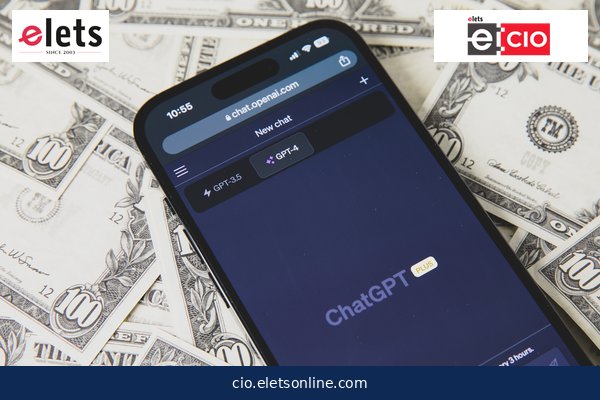
Featured image: A smartphone showing ChatGPT in front of a laptop (file photo). Photo: Jernej Furman via Wikimedia Commons (CC BY 2.0)
Be a part of Elets Collaborative Initiatives. Join Us for Upcoming Events and explore business opportunities. Like us on Facebook , connect with us on LinkedIn and follow us on Twitter.
"Exciting news! Elets technomedia is now on WhatsApp Channels Subscribe today by clicking the link and stay updated with the latest insights!" Click here!