


artificial intelligence
NSE Deploys Liquid Cooling for AI, Readies Room for 224 GPUs
NSE Deploys Liquid Cooling for AI, Readies Room for 224 GPUs
![]() By Elets News Network - 09 November 2026


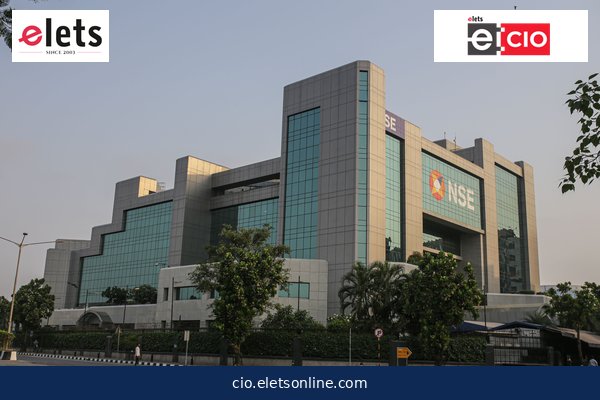
The National Stock Exchange of India (NSE) has deployed Direct-to-Chip Liquid Cooling (DCLC) at its on-premises data centre to run its growing AI workloads, the exchange said in Mumbai on 9 November 2026. NSE plans to take its GPU fleet past 80 units this quarter, and the new set-up can hold up to 224 GPUs.
NSE called it the first deployment of its kind in Indian capital markets. The move comes a day after the exchange launched NSE Market Lens, its AI stock screener in beta, a sign that AI is moving from pilots to products that need dedicated compute.
What NSE has deployed
Direct-to-chip cooling carries liquid through cold plates fitted on top of processors, taking heat away at the source instead of relying only on chilled air across the server hall. That matters for GPUs, which draw far more power per rack than the servers that run trading and clearing systems.
According to the NSE press release of 9 November 2026, the key details are:
- Capacity: multiple GPUs are already live, with more than 80 planned this quarter and room for up to 224 across high-density racks.
- Location: the infrastructure sits inside NSE’s own on-premises data centre, not a public cloud.
- Next step: NSE will extend DCLC to its co-location data centre in the near future, based on what market participants need.
The exchange has not disclosed the cost, the GPU models or the cooling vendor.
Why NSE liquid cooling matters for AI governance
NSE said keeping AI compute on its own premises strengthens data sovereignty and gives it complete control over AI data, computing resources and access. It also supports the exchange’s security governance and compliance with regulatory requirements as AI use grows.
That fits the direction regulators have set. In its consultation paper on responsible AI and ML use in securities markets, the Securities and Exchange Board of India (SEBI) proposed that market entities stay accountable for their AI models, data and outcomes.
“AI is driving a fundamental shift in technology infrastructure, with significantly higher demands on compute density, power and cooling,” said Sampath Manickam, Chief Technology Officer, NSE. Viral Mody, Executive Director, NSE, said the deployment prepares the exchange for evolving computing needs while supporting a more energy-conscious technology set-up.
What it means for India’s AI infrastructure
Liquid cooling is becoming standard for AI-ready facilities in India, from L&T Vyoma.AI’s 52 MW AI-ready data centre in Chennai to the STTGDC Noida campus built to host Neysa’s AI GPUs. NSE’s move shows the same shift inside a regulated enterprise that prefers to own its AI stack.
For CIOs in banking, insurance and capital markets, the lesson is that on-premises AI needs power and cooling planning as much as model choice. Building ahead of demand can also help, given that Indian AI companies face 3 to 6 month GPU delays.
Key takeaways
- NSE has deployed Direct-to-Chip Liquid Cooling for AI workloads in its on-premises data centre, a first for Indian capital markets.
- Its GPU capacity will pass 80 this quarter, with the set-up designed for up to 224 GPUs.
- NSE plans to extend the technology to its co-location data centre based on market participants’ needs.
FAQ
What is Direct-to-Chip Liquid Cooling?
It is a cooling method that runs liquid through cold plates mounted on processors such as GPUs, removing heat at the chip more efficiently than air cooling alone.
Will NSE offer liquid cooling in co-location?
NSE said it will extend DCLC to its co-location data centre in the near future, depending on the requirements of market participants.
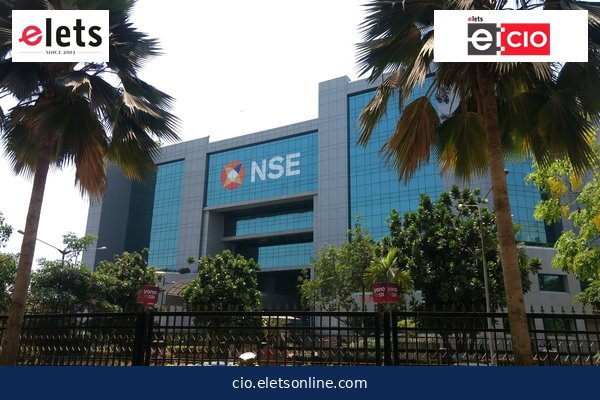
Featured image: National Stock Exchange of India building in Mumbai. Photo: 312user, Wikimedia Commons (CC BY-SA 4.0)
Be a part of Elets Collaborative Initiatives. Join Us for Upcoming Events and explore business opportunities. Like us on Facebook , connect with us on LinkedIn and follow us on Twitter.
"Exciting news! Elets technomedia is now on WhatsApp Channels Subscribe today by clicking the link and stay updated with the latest insights!" Click here!