


artificial intelligence
Jefferies Flags Possible AI Capex Peak, Lifts India to 14%
Jefferies Flags Possible AI Capex Peak, Lifts India to 14%
![]() By Elets News Network - 09 November 2026



Jefferies has warned that the global AI capex cycle may have peaked, or at least entered a mid-cycle correction, as borrowing costs rise and investors question returns. In his GREED & fear report dated 5 November 2026, Christopher Wood raised India’s weight in the Jefferies Asia-Pacific ex-Japan relative-return portfolio to 14% from 12%.
The call adds to a run of warning signs on AI funding, from SBI Research’s estimate that Magnificent Seven debt has hit $578 billion on AI spending to a sharp sell-off in AI-linked chip stocks across Asia.
Why Jefferies thinks the AI capex cycle may have peaked
According to the report, Microsoft, Amazon, Alphabet and Meta together raised capital expenditure by 108% year on year to $202 billion in the third quarter of 2026. Consensus estimates put their combined capex at $1.04 trillion in 2027, but Jefferies said financial markets are showing growing reluctance to fund spending on that scale.
“All of the above suggests the AI capex cycle may have peaked, or at least commenced a mid-cycle correction,” the report said. It pointed to widening bond spreads at the large hyperscalers and a sharp rise in credit default swap spreads for Oracle and CoreWeave, two closely watched AI infrastructure players.
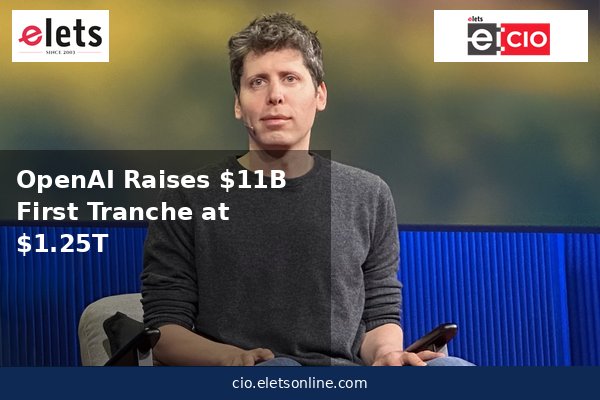
The financing strain is visible elsewhere too. OpenAI closed an $11 billion first tranche at a $1.25 trillion valuation, below the size and valuation it had first targeted.
What the numbers show
- US growth: AI-related investment added 1.39 percentage points, or 67%, of US real GDP growth of 2.1% in the four quarters to September 2026, Jefferies estimated.
- Chip stocks: the China AI Semiconductor Top 10 Index has fallen about 50% from its June peak, and an index of Micron, Samsung Electronics and SK Hynix is down about 40%.
- Portfolio shift: South Korea and Taiwan were each cut by one percentage point, to 18% and 24%, and both stay underweight.
Demand at the top of the stack still looks strong. In its third-quarter 2026 results, Alphabet reported Google Cloud revenue up 103% to $30.7 billion and spent about $51.4 billion on property and equipment in the quarter. The question Jefferies raises is whether credit markets will keep paying for that pace in 2027.
What it means for India’s AI strategy
The higher India weight is a change to a model portfolio, not a record of actual foreign inflows, and the report does not tie it to Indian earnings or valuations. Still, it signals that India is seen as less exposed to an AI hardware downturn than chip-heavy Korea and Taiwan.
That fits a wider debate about where India’s AI edge lies. A Rhodium Group report argued that India’s real AI opportunity is the services layer rather than the data centre build-out, where subsidised GPUs run at about 20% use. At the same time, global AI companies are turning to India for data centre capacity as power runs short elsewhere. For CIOs, a costlier funding market could mean slower GPU price cuts and a sharper focus on AI projects that show returns.
Jefferies also suggested investors look beyond the AI supply chain, naming healthcare and biotechnology, where AI-led drug development could open new opportunities. Wood, Global Head of Equity Strategy at Jefferies, has published GREED & fear weekly since 1996.
Key takeaways
- Jefferies says the AI capex cycle may have peaked or begun a mid-cycle correction as funding costs rise.
- Big Tech capex jumped 108% to $202 billion in Q3 2026, with $1.04 trillion expected in 2027.
- India’s weight in the Jefferies Asia-Pacific ex-Japan portfolio rose to 14% from 12%, while Korea and Taiwan were cut.
FAQ
What did Jefferies say about AI capex?
Its 5 November 2026 GREED & fear report said the AI capex cycle may have peaked or started a mid-cycle correction, as markets grow reluctant to fund hyperscaler spending.
How did Jefferies change its India allocation?
It raised India’s weight in its Asia-Pacific ex-Japan relative-return portfolio by two percentage points to 14%, keeping the country overweight.
Featured image: Google data centre in Council Bluffs, Iowa, at sunset. Photo: Chad Davis, Wikimedia Commons (CC BY 2.0)
Be a part of Elets Collaborative Initiatives. Join Us for Upcoming Events and explore business opportunities. Like us on Facebook , connect with us on LinkedIn and follow us on Twitter.
"Exciting news! Elets technomedia is now on WhatsApp Channels Subscribe today by clicking the link and stay updated with the latest insights!" Click here!