


artificial intelligence
India Risks Becoming a ‘Digital Colony’ Without Its Own AI Foundations, Warns Sarvam’s Vivek Raghavan
India Risks Becoming a ‘Digital Colony’ Without Its Own AI Foundations, Warns Sarvam’s Vivek Raghavan
![]() By Elets News Network - 26 October 2026


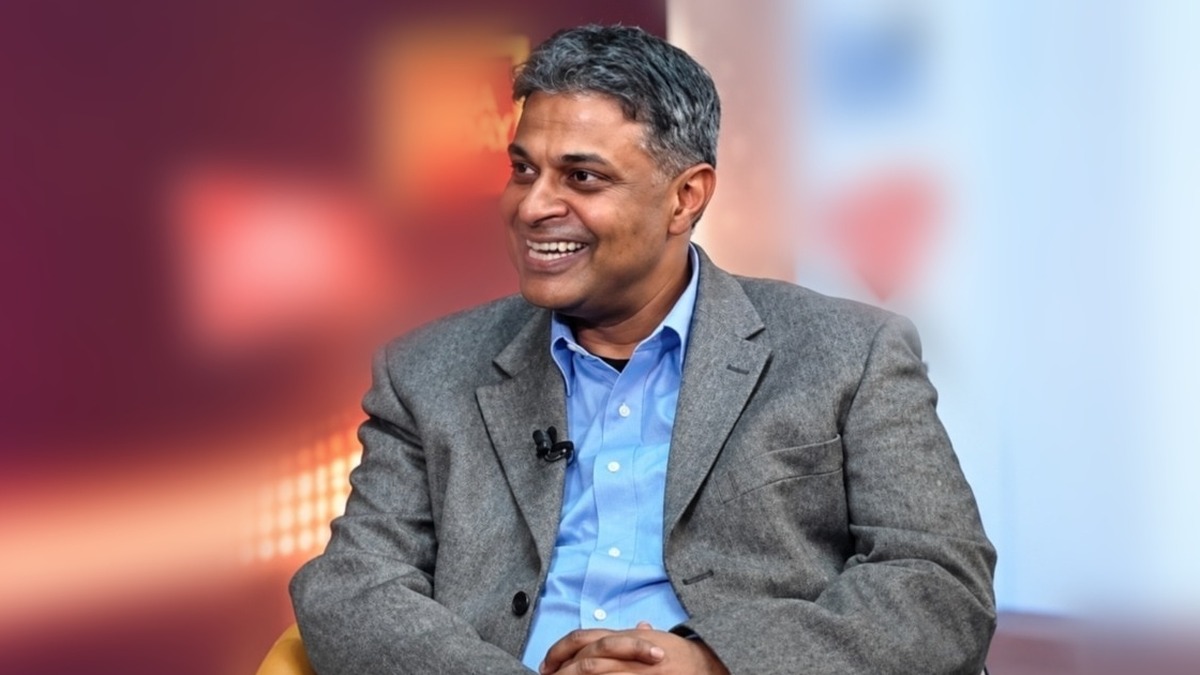
India must build its own artificial intelligence foundations or risk becoming a “digital colony” dependent on technology designed elsewhere, according to Dr Vivek Raghavan, Co-founder of Sarvam. Addressing students at The Scindia School’s Founder’s Day event in Gwalior, Raghavan framed technological sovereignty as a strategic necessity at a time when the United States and China are racing for leadership in AI, Business Today reported.
His message to the Gen Alpha audience was direct: “You are not the future of this country. You are its present.” Young Indians, he argued, should take ownership of the country’s AI journey now rather than wait for permission.
Models, Compute and Data Under Indian Control
At the heart of Raghavan’s argument is a three-part agenda: India should develop its own AI models, build its own computing infrastructure and retain control over its data. Without these building blocks, he cautioned, the country would end up shaping very little of how AI is built or used.
He summed up the ambition as AI built “by Indians, for India, and then for the world”, positioning domestic capability as the starting point for global relevance rather than an inward-looking goal.
The view carries weight given Sarvam’s own role. In April 2025, the Government of India selected Sarvam under the IndiaAI Mission to build the country’s sovereign large language model from scratch, with dedicated compute resources for an indigenous foundation model designed for Indian languages and voice.
The Aadhaar Lesson: Building at Population Scale
Raghavan drew on more than a decade of volunteering with the Aadhaar programme, during which he was involved from the issue of the very first identity to the billionth. That experience, he said, is proof that India can design and run systems at a scale few nations attempt.
He urged the same ambition be applied to AI — treating it as national digital infrastructure rather than a product to be imported.
Language as the Real Test of Inclusion
For Raghavan, AI only matters if it reaches everyone. He outlined a vision of affordable AI tools that personalise education and widen access to healthcare, banking, legal assistance and government services.
Indian languages, he stressed, are central to that promise. “If AI does not work in your language, it does not really work for you,” he said — a reminder that a technology built primarily for English speakers will leave much of the country behind.
Jobs, Reskilling and Safeguards
Raghavan did not gloss over the disruption ahead. Some jobs, he acknowledged, will disappear or change as AI matures. His response is continuous learning and reskilling, combined with strong safeguards against fraud, misinformation and security threats — issues that CIOs and policymakers are already grappling with as AI adoption accelerates.
Better Questions, Not Memorised Answers
Encouraging students to experiment with AI and stay curious, Raghavan said the ability to ask good questions will matter far more than memorising answers, which is steadily losing value in an AI-assisted world.
He linked leadership with discipline, self-reliance and service, and tied the moment to India’s goal of becoming a developed nation by 2047 under the Viksit Bharat vision. Students, he said, need not wait for age, seniority or permission to contribute.
Why It Matters
Raghavan’s remarks capture a debate that is moving to the centre of India’s technology strategy: whether the country will be a builder or merely a consumer of AI. For enterprise and government technology leaders, the questions he raises — sovereign models, domestic compute, data control and multilingual access — are fast becoming practical decisions rather than abstract policy ideals.
Be a part of Elets Collaborative Initiatives. Join Us for Upcoming Events and explore business opportunities. Like us on Facebook , connect with us on LinkedIn and follow us on Twitter.
"Exciting news! Elets technomedia is now on WhatsApp Channels Subscribe today by clicking the link and stay updated with the latest insights!" Click here!