


News
India’s AI companies face 3–6 month GPU delays despite access to capital
India’s AI companies face 3–6 month GPU delays despite access to capital
![]() By Elets News Network - 26 October 2026


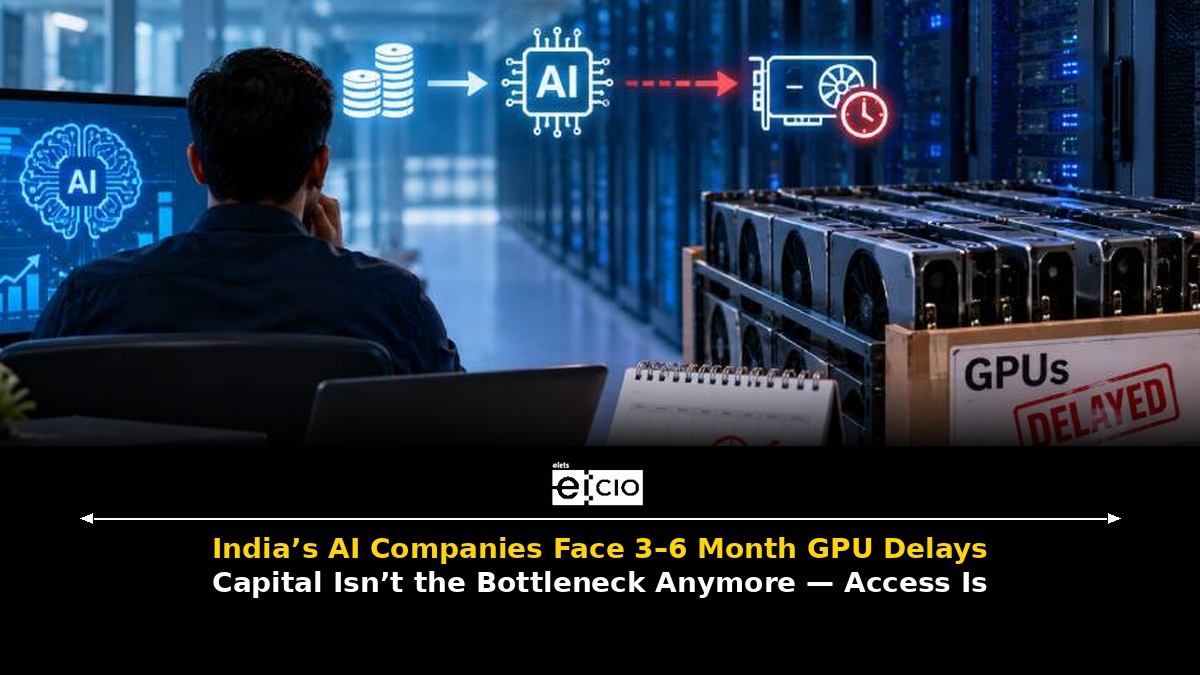
India’s artificial intelligence companies are running into a hard wall that money alone cannot clear: graphics processing units (GPUs) are taking three to six months to arrive, even when founders have cash, cloud credits and board approval to spend.
That is the picture that emerges from founders and investors speaking this month, including Juspay co-founder and COO Sheetal Lalwani and growX Ventures founding partner and CEO Ashish Taneja. Affordability, they say, is no longer the main constraint. Access is.
From capital to capacity
Venture-backed startups often receive free cloud credits in their first year, while later-stage firms can fund compute from their own balance sheets. Yet delivery queues for specialised AI chips routinely stretch across a quarter. “When a GPU card takes three or four months to arrive, a whole engineering team can lose a quarter, and that hurts far more than a chip being a generation old,” Taneja said.
Rahul Agarwalla, managing partner at SenseAI Ventures, put it bluntly: early-stage startups can usually afford compute, but “the challenge with AI compute is not just affordability, but access.” Demand is outstripping supply, so companies are trying to lock capacity years ahead — commitments that are hard for young startups to forecast.
Juspay’s bottleneck
Bengaluru-based Juspay swung to a net loss of ₹90 crore in FY26 after a ₹62 crore profit the year before, as it ramped AI infrastructure and overseas expansion. Lalwani said the company wants to spend more on GPUs but is bottlenecked on allocation. “I have been given commitments that it will take three to six months to come,” he said, adding that Juspay funds GPU purchases from cash flows and plans to accelerate GPU investment in FY27, including a larger 72-GPU rack still awaited.
Juspay runs about 95% of its AI-assisted coding on open-source models on GPUs it controls. Lalwani estimated renting an 8-node GPU cluster at ₹25–35 lakh a month, versus several times that cost if the same work were bought as tokens from frontier labs.
HBM, power and data centres
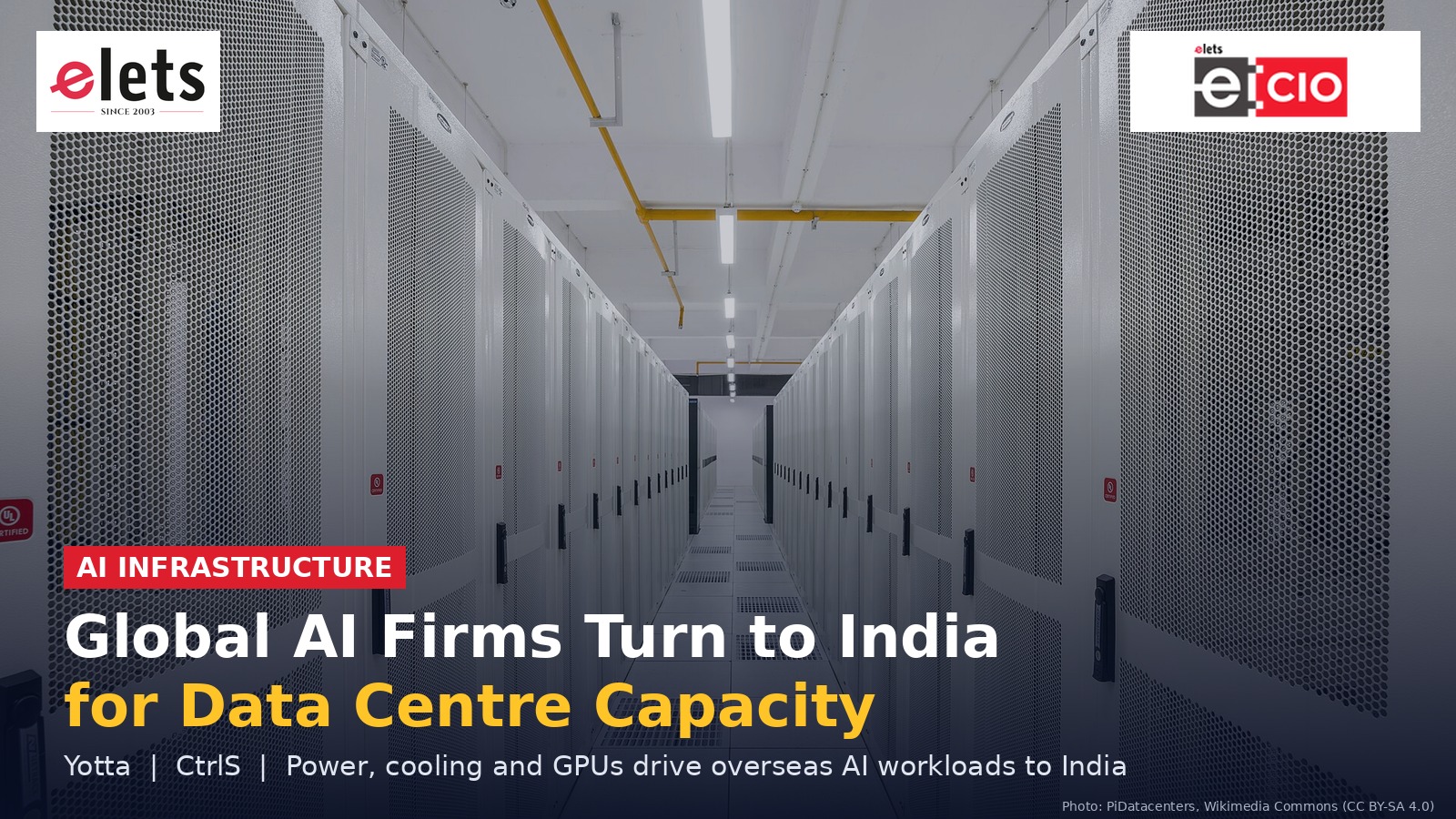
The wait is not only about GPU cards. High-bandwidth memory (HBM) — produced at scale by only a handful of suppliers — is largely committed for 2026, and GPUs only become useful when paired with continuous power and cooling. Outside India, much of that facility capacity is already locked by hyperscalers; Lalwani warned larger players could also lock up Indian data-centre power even if chip supply eases.
Robotics and defence firms face additional constraints. CynLr founder Gokul N A said industrial chipset prices can swing 2–3x and that edge compute must sit next to the robot. Defence tech firm Armory said shared IndiaAI pools are a poor fit without dedicated metal-as-a-service racks for security-sensitive workloads.
Public pool, private needs
The government’s IndiaAI Mission has onboarded more than 38,000 GPUs at subsidised rates — useful for training language models in shared data centres, Taneja noted. Foundation-model builders may still put half or more of a funding round into compute, versus 10–20% for application companies. For most app builders, he still favours renting over buying early, so capital is not locked into hardware that ages before product-market fit.
The strategic shift is clear: India’s AI race is no longer only about who raises the cheque. It is about who can secure the right chips, memory, power and racks — and use them before the next quarter slips away.
Sources: Business Standard / Communications Today reporting, October 2026; ET EnterpriseAI on Juspay FY26.
Be a part of Elets Collaborative Initiatives. Join Us for Upcoming Events and explore business opportunities. Like us on Facebook , connect with us on LinkedIn and follow us on Twitter.
"Exciting news! Elets technomedia is now on WhatsApp Channels Subscribe today by clicking the link and stay updated with the latest insights!" Click here!