




Artificial intelligence is moving from an emerging technology conversation to a question of national capability. For India, the next phase of AI will not be defined only by how quickly new models are developed or how many organisations adopt generative AI. It will increasingly depend on whether India can build the infrastructure to support AI at scale, protect its strategic interests, move AI from experimentation into production, create new technology-led businesses, and ensure that the benefits of intelligence reach beyond the largest enterprises and technology centres.
That makes the next set of conversations around AI fundamentally different. The question is no longer simply what AI can do. The more important questions are about what India wants to build, where it wants to lead, how it will manage risks, and how it will translate technological capability into economic and social value.
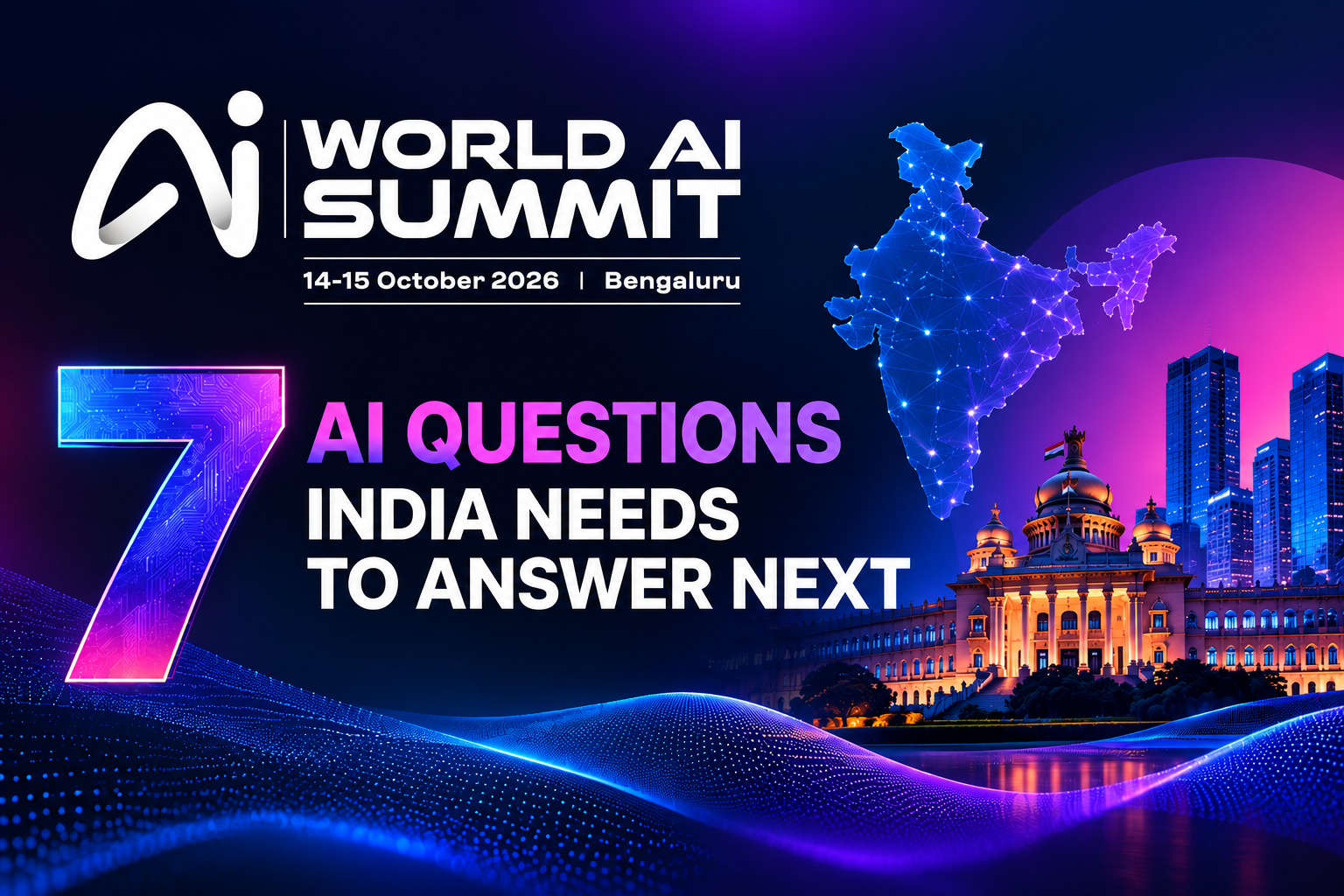
The upcoming World AI Summit 2026 in Bengaluru brings these questions together through seven tracks covering the AI ecosystem from frontier technology and sovereignty to enterprise adoption, GCCs, robotics, public impact and investment. Rather than viewing these as separate agenda items, they can be seen as seven questions that India needs to explore as it enters its next AI chapter.
Can India Build the Intelligence Infrastructure It Will Need?
The first question begins at the foundation: how much of the AI stack can India build, operate, and scale?
Frontier Models & Compute is about much more than large language models. The future of AI depends on access to advanced computing, data infrastructure, scalable platforms, and the ability to support increasingly demanding workloads. As AI applications move from experimentation into everyday business and public use, compute capacity and infrastructure will become strategic enablers.
For India, this creates a wider opportunity. The country has a large technology workforce, a growing digital economy and an expanding ecosystem of AI startups and enterprises. But sustained AI leadership will require investment across the infrastructure layer, alongside research and engineering capabilities.
The conversation therefore needs to move beyond the excitement around the latest model. It needs to ask what infrastructure India requires to develop, deploy and operate AI efficiently and at scale.
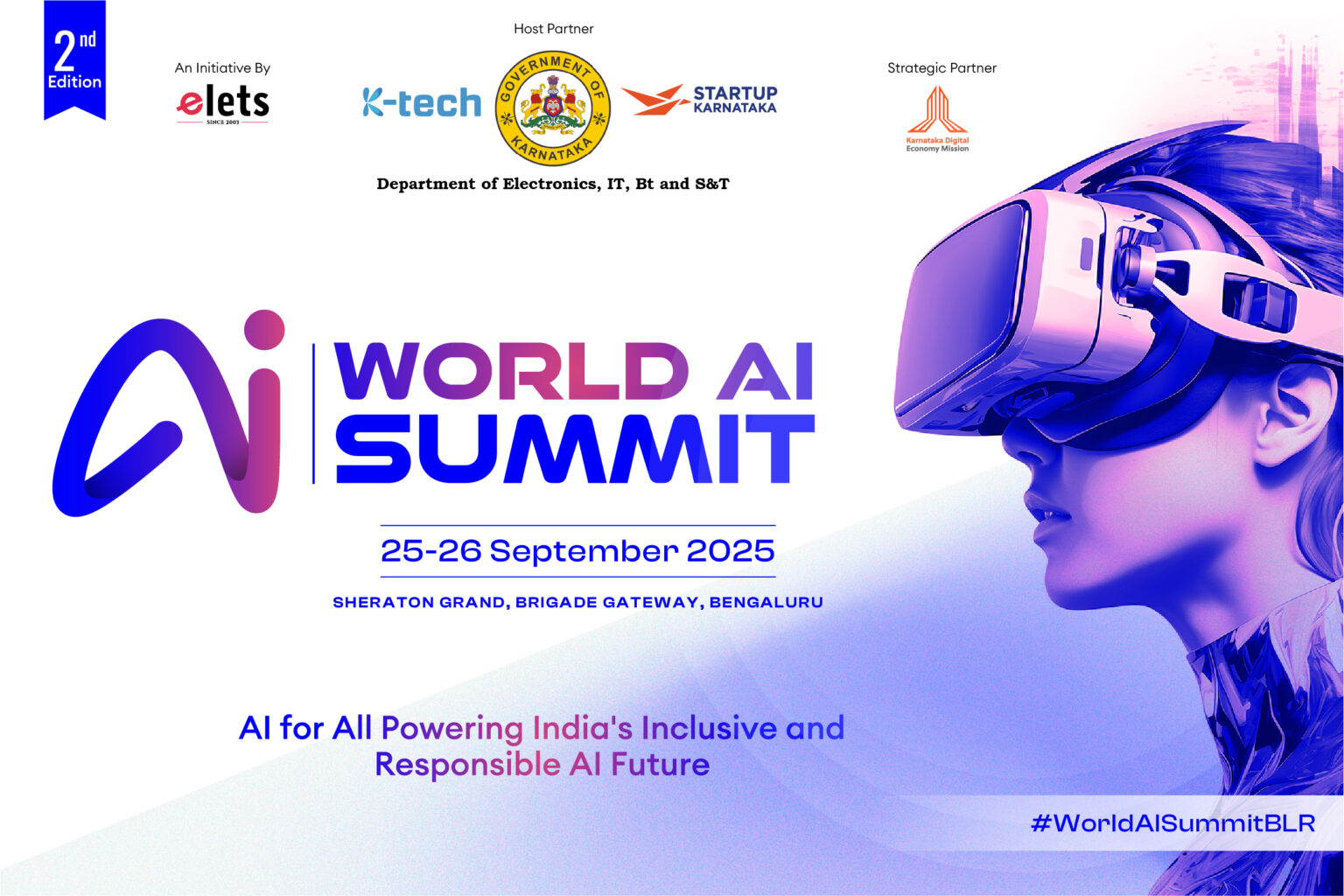
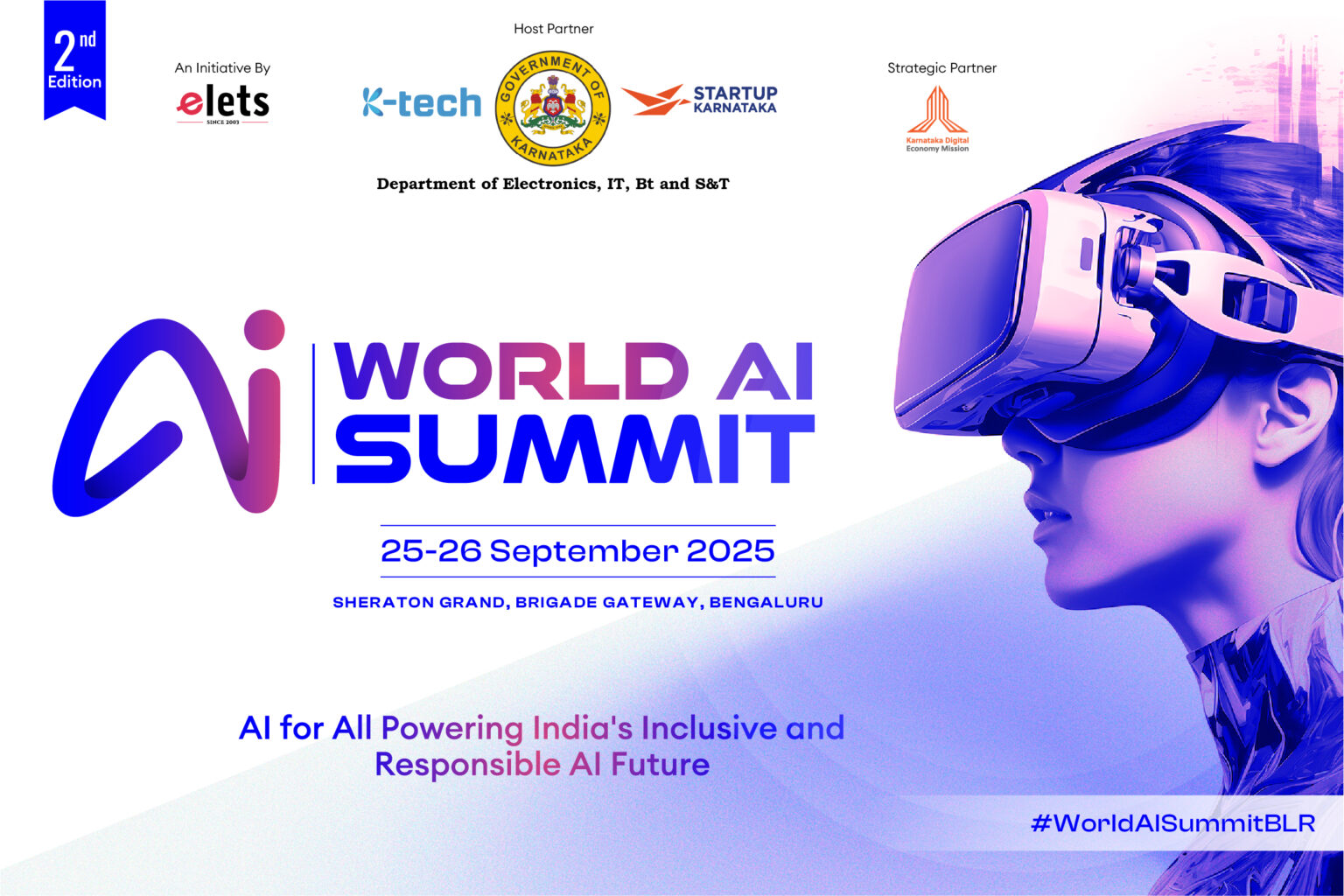
The experience of the previous World AI Summit showed how broad this ecosystem can be. The 2025 edition brought together government, enterprise, startup and technology stakeholders, with discussions spanning data, infrastructure, enterprise AI and public-sector applications.
How Much AI Capability Does India Need to Own?
AI is also becoming a question of sovereignty.
The second question is whether India can maintain strategic control over the technologies, data, infrastructure and capabilities that increasingly influence its economy and public institutions. The Sovereign AI & Geopolitics track examines this intersection of AI sovereignty, national capabilities, data security and the changing global technology landscape.
For India, sovereignty does not necessarily mean building everything independently. It means developing enough domestic capability to make strategic choices, while participating effectively in global AI ecosystems.
This includes questions around data, computing resources, critical digital infrastructure, research capabilities, and access to advanced technologies. It also means understanding how international partnerships, technology supply chains and geopolitical developments could influence India’s AI journey.
The debate is particularly relevant as governments and enterprises increasingly consider where sensitive data is processed, which models they depend on, and how much control they have over critical AI systems.
When Will Enterprise AI Move From Pilots to Production?
India’s enterprises have already experimented extensively with AI. The next challenge is much harder: how do organisations make AI a dependable part of everyday operations?
Enterprise AI in Production shifts attention from demonstrations and pilots to measurable implementation. Organisations are looking at AI for customer experience, automation, decision support, software development, risk management, analytics and operational efficiency. But deploying an AI system is very different from proving that a model works in a controlled environment.
Enterprises have to address data quality, integration, security, governance, employee adoption and measurable business outcomes. They also have to determine where human judgement remains essential.
This is where the AI conversation becomes less about technology alone and more about organisational architecture.
The 2025 summit reflected this practical focus. Ratan Kumar Kesh, Executive Director & COO, Bandhan Bank, described the event as particularly productive and highlighted the value of connecting with key stakeholders through the pre-event CEO engagement.
The next phase of enterprise AI will ultimately be judged not by the number of pilots launched, but by how effectively AI becomes part of real business processes.
Can India’s GCCs Become AI Innovation Engines?
Global Capability Centres have already evolved far beyond their traditional role as delivery centres. The fourth question is whether India’s GCC ecosystem can become a major engine for global AI research, product development and innovation.
India’s large technology talent pool has made it an important destination for global engineering and digital operations. AI adds another dimension to that opportunity. GCCs can increasingly contribute to model development, data science, product engineering, cybersecurity, automation and advanced research.
But the opportunity also brings a talent challenge. AI requires specialised skills, cross-functional teams and continuous learning. Organisations will need people who understand both technology and business context.
The GCC track therefore raises a larger question: can India move from being a major technology workforce hub to becoming one of the places where the world’s AI products, platforms and intellectual property are created?
The presence of enterprise technology leaders from organisations including JPMorgan Chase, Wells Fargo, Tata Digital, eBay, HSBC and others in the 2026 speaker ecosystem reflects the growing breadth of this conversation.
How Quickly Can AI Move Into the Physical World?
Much of today’s AI conversation happens on screens. But the next frontier is increasingly physical.
Robotics, Agents & Embodied AI asks what happens when AI systems are able not only to generate information but also to make decisions, coordinate actions, and interact with the physical environment.
AI agents could change how complex digital workflows are handled, while robotics and embodied AI could reshape manufacturing, logistics, healthcare, mobility and other physical industries. The challenge is to develop systems that can operate reliably outside controlled environments.
This raises important questions about autonomy, safety, human oversight and accountability. An AI system generating an incorrect answer is one kind of problem; an autonomous system taking an incorrect physical action presents another.
For India, the opportunity extends across industrial automation, agriculture, healthcare, logistics and infrastructure. The conversation will therefore need to connect cutting-edge AI research with the realities of India’s large and diverse physical economy.
Can AI Become Truly AI for Bharat?
Perhaps the most important question is also the broadest: who benefits from India’s AI growth?
AI for Bharat places inclusion at the centre of the conversation, looking at how AI can contribute to governance, healthcare, education, agriculture and public services.
India’s scale makes this particularly significant. AI solutions designed for the country have to account for multiple languages, different levels of digital access, diverse economic conditions, and very different use cases across urban and rural environments.
The goal cannot simply be to reproduce applications developed for other markets. India has the opportunity to develop solutions around its own needs, including multilingual interfaces, public-service delivery, agricultural intelligence, healthcare access and education.
The previous summit’s emphasis on connecting government and private stakeholders also points towards the importance of collaboration. Sharad Agarwal, Chief Sales Officer, EDAS, noted that bridging the gap between government and private stakeholders was important for startups and technology players.
That connection will become increasingly important if AI is to move from high-value enterprise applications to broader public impact.
Can India’s AI Startups Turn Innovation Into Sustainable Businesses?
Technology ultimately needs capital, customers, and markets to scale. The seventh question is therefore about the business side of AI: can India’s founders build companies that survive beyond the initial excitement around AI?
Capital, Founders & Exits focuses on the funding environment, investment opportunities, scaling and pathways towards successful exits.
AI startups face a distinctive challenge. Building sophisticated models and products can require significant computing resources, specialised talent and long development cycles. At the same time, the market is changing quickly, making it important for founders to identify real customer problems rather than simply adding AI to existing products.
India’s advantage lies in its large domestic market, strong startup ecosystem and growing enterprise demand. But the next generation of AI companies will need to demonstrate more than technical novelty. They will need strong products, defensible technology, sustainable economics and the ability to scale across markets.
The 2025 summit brought startups, investors, enterprises and policymakers into the same ecosystem, reflecting the importance of these connections. Pramod Ganji, CE of, Zrika, described the panel discussions as relevant and valuable for their regulatory perspectives, while also highlighting the business value of the platform.
The Bigger Question: What Kind of AI Future Does India Want?
These seven questions are connected. Compute influences sovereignty. Sovereignty affects enterprise choices. Enterprise adoption creates opportunities for GCCs and startups. Robotics expands AI into the physical economy. And AI for Bharat determines whether technological progress translates into wider social and economic value.
That is why India’s AI conversation cannot be reduced to one technology, one industry or one policy framework. It is an ecosystem conversation involving governments, enterprises, researchers, startups, investors and citizens.
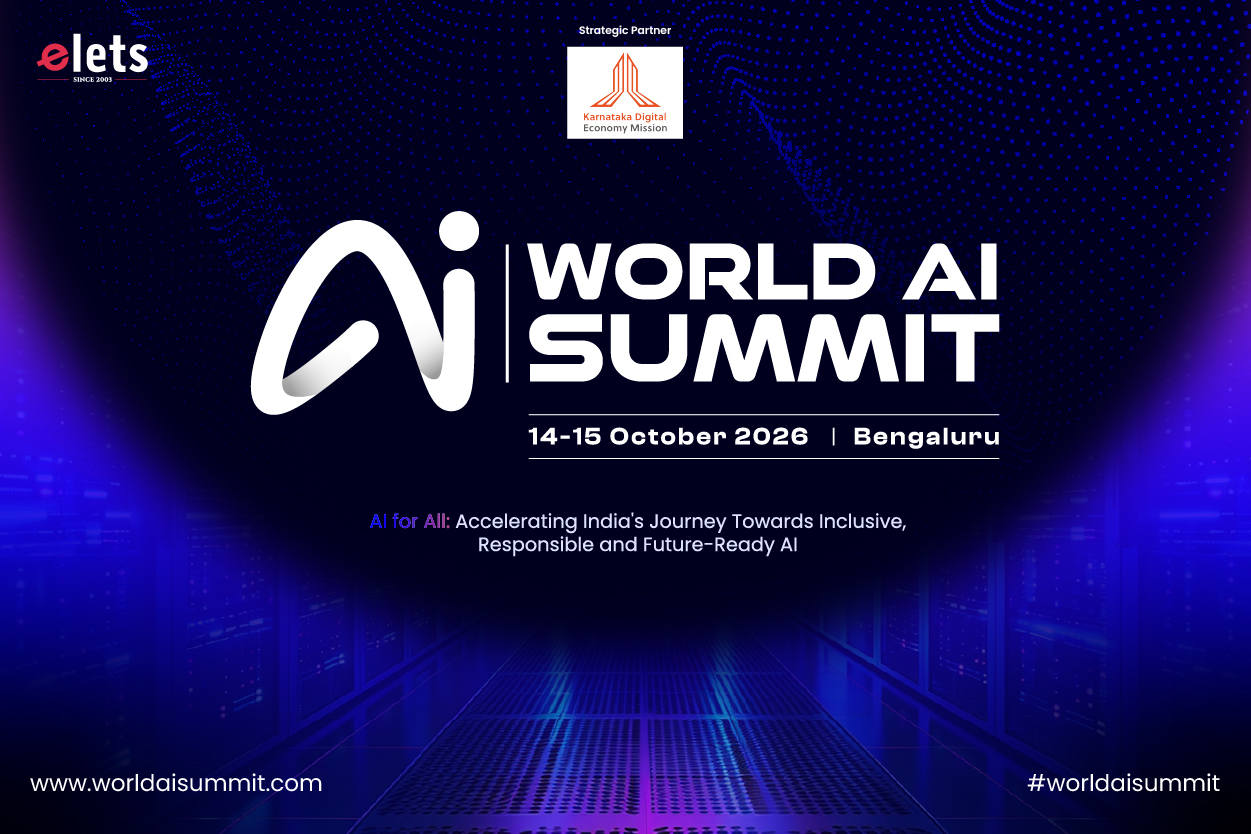
The World AI Summit 2026 is designed around this broader view. Scheduled for 14–15 October 2026 in Bengaluru, the summit will bring together policymakers, industry leaders, innovators, researchers and practitioners under the theme “AI for All: Accelerating India’s Journey Towards Inclusive, Responsible and Future-Ready AI.” The event will feature more than 100 speakers, 1,000+ delegates and 50+ startups, with its seven tracks examining the technologies, institutions and business models shaping India’s AI future.
The real value of these conversations will not be in finding one definitive answer to each question. It will be in bringing different perspectives into the same room and asking what India needs to build next. Because the next phase of AI will not be defined simply by how intelligent machines become. It will be defined by how intelligently India chooses to build, govern, deploy, and share that intelligence.
For more updates, check: https://www.worldaisummit.com/
Be a part of Elets Collaborative Initiatives. Join Us for Upcoming Events and explore business opportunities. Like us on Facebook , connect with us on LinkedIn and follow us on Twitter.
"Exciting news! Elets technomedia is now on WhatsApp Channels Subscribe today by clicking the link and stay updated with the latest insights!" Click here!