


Article
Inside the Boardroom: How CEOs Are Reimagining Business with AI
Inside the Boardroom: How CEOs Are Reimagining Business with AI
![]() By Elets News Network - 24 September 2026
By Elets News Network - 24 September 2026


Artificial intelligence has moved from the technology roadmap to the centre of corporate strategy. What was once largely a conversation for CIOs, CTOs and data science teams is now a boardroom priority. CEOs are asking how AI can change the way their organisations operate, compete and grow as generative AI, intelligent automation and emerging agentic AI move from experimentation into everyday business.
For business leaders, the challenge is no longer simply whether to invest in AI. It is about turning those investments into measurable value. Deploying an AI platform or launching a successful pilot does not automatically lead to transformation. Organisations making meaningful progress are treating AI as an enterprise capability that connects data, people, processes, technology and leadership.
This is creating a new CEO AI strategy, where productivity, innovation, governance, workforce transformation and customer experience are considered together. The next phase of enterprise AI will therefore be less about the number of pilots launched and more about scaling the right use cases, redesigning workflows and delivering measurable business outcomes.
From AI Pilots to Enterprise Transformation
The first wave of enterprise AI was largely defined by experimentation. Marketing teams explored content generation, customer-service departments introduced chatbots, developers adopted AI coding assistants, and analysts used AI for forecasting and reporting. While these initiatives demonstrated the potential of artificial intelligence, many remained limited to individual departments.
The conversation in the boardroom is now becoming broader. CEOs are increasingly looking at AI as an operating-model transformation rather than another technology deployment. The question is shifting from “Where can we use AI?” to “How should our organisation work differently because AI exists?”
That distinction is important. Adding an AI tool to an inefficient process may make it faster, but it does not necessarily make the business smarter. Real AI transformation requires organisations to rethink workflows. A bank, for instance, could use AI to automate customer onboarding, but a more transformative approach would redesign the entire journey around intelligent document processing, risk assessment, personalised communication and human intervention where required.
The same applies across sectors. Manufacturers can use AI for predictive maintenance and quality control. Retailers can connect demand forecasting with inventory and customer behaviour. Healthcare organisations can streamline documentation, while logistics companies can optimise routes and anticipate disruptions.
The technology matters, but the competitive advantage comes from redesigning the business around it.
The CEO’s AI Playbook Starts with Business Value
The strongest AI strategy for CEOs does not begin with a model, platform or vendor. It begins with a business problem.
Leadership teams need to identify where AI can deliver measurable improvements in revenue, productivity, customer experience, efficiency or risk management. A financial institution may prioritise fraud detection and personalised banking, while a manufacturer may focus on predictive maintenance. A retailer could explore AI-powered demand forecasting and personalisation, while professional-services firms may use it for knowledge management and document analysis.
This requires businesses to create an AI portfolio rather than a collection of disconnected experiments. Some initiatives may deliver immediate productivity gains, while others may require investment in data, infrastructure and skills before generating returns. A smaller number may create entirely new products, services or revenue streams.
Success also needs to be measured differently. Instead of focusing on the number of AI pilots launched, CEOs should examine revenue generated, costs reduced, customer satisfaction, cycle time, employee productivity, and risk reduction.
The fundamental question is simple: Is AI creating business value?
Productivity Is the First Dividend: Not the Final Destination
Productivity is one of the strongest drivers of AI adoption in business. Generative AI can help employees summarise information, analyse documents, prepare reports, write code, create content, and accelerate routine decisions. AI agents are taking this further by performing sequences of tasks across business workflows.
But productivity should not simply become a headcount equation.
If an employee saves two hours a day because AI handles repetitive work, what happens to those hours? The greater opportunity is to redirect them towards customer relationships, innovation, strategic thinking and complex problem-solving.
This is where AI-powered productivity becomes meaningful. AI can process large volumes of information and perform repetitive tasks at speed, while people contribute judgement, creativity, empathy, context and accountability.
For CEOs, productivity should therefore be measured not only by hours saved but by whether AI is helping the organisation develop products faster, improve customer service, make better decisions and respond more quickly to changing markets.
Productivity is the entry point. Transformation is the destination.
AI Governance Moves into the Boardroom
As AI becomes embedded in important business decisions, governance can no longer remain a purely technical or compliance function. Privacy, cybersecurity, intellectual property, bias, transparency, model reliability and accountability are becoming strategic considerations.
An AI system generating marketing content is very different from one influencing lending, recruitment, healthcare, or insurance decisions. The greater the potential impact, the greater the need for oversight and human accountability.
This makes AI governance increasingly important for CEOs. Leadership teams need to understand what AI systems are being deployed, what data they access, who owns them and what safeguards are in place. Organisations also need clear rules around human oversight, model monitoring, incident management and third-party AI solutions.
For Indian enterprises, this is particularly relevant as the focus on responsible AI grows. Safety, reliability, transparency, privacy, security and accountability are becoming important foundations for enterprise AI adoption.
The goal should not be governance that prevents experimentation, but governance that enables organisations to innovate with confidence.
India’s AI Opportunity Is an Enterprise Opportunity
India’s enterprise AI journey is closely linked to the country’s broader AI infrastructure and policy ambitions. The IndiaAI Mission is developing capabilities across compute infrastructure, datasets, foundation models, application development, future skills, startup financing and safe and trusted AI.
These initiatives matter because enterprise AI requires more than access to powerful models. Businesses need reliable data, computing capacity, cloud infrastructure, cybersecurity and skilled professionals.
Initiatives such as IndiaAI Compute and AIKosh are strengthening these foundations and creating opportunities for startups, researchers, academia and enterprises to access AI capabilities and datasets.
For Indian businesses, this creates opportunities to develop AI solutions designed around the country’s distinctive requirements, from multilingual applications and financial inclusion to healthcare, agriculture, manufacturing, public services and digital commerce.
India’s opportunity is therefore not simply to become a major consumer of AI. It is to become a significant builder of AI solutions for India and the world.
The Next Boardroom Conversation: Agentic AI
If generative AI has changed how employees interact with technology, agentic AI could change how organisations execute work.
AI agents can potentially plan and perform multiple steps towards a defined objective. An enterprise procurement agent, for example, could identify requirements, compare suppliers, review contracts and prepare recommendations. A customer-service agent could investigate an issue across multiple systems and escalate it when human judgement is required.
The opportunity is significant because businesses are built around workflows, not individual prompts.
But greater autonomy creates greater responsibility. CEOs will need to decide where agents can act independently, where approval is required, and which decisions should remain under human control. Access permissions, monitoring, audit trails and escalation mechanisms will become increasingly important as agentic AI moves into production.
The defining question for the next phase of enterprise AI may therefore not be how autonomous AI can become, but how intelligently organisations can govern that autonomy.
What Previous AI Leaders Have Said
The practical nature of this transformation has been reflected by leaders participating in previous editions of the summit. Their observations highlight why collaboration between business, technology, government and the wider innovation ecosystem matters.
Harshil Mathur, CEO and Co-Founder of Razorpay, highlighted the strength of India’s technology ecosystem, saying, “Karnataka has firmly established itself as a global leader in tech. Elets platform brilliantly showcased this strength, reinforcing how this region is building not just for India, but for the world.”
Ratan Kumar Kesh, Executive Director & COO of Bandhan Bank, emphasised the value of executive engagement, describing the pre-event CEO interaction as “a game-changer” that enabled meaningful connections with key stakeholders.
Pramod Ganji, CEO of Zrika, highlighted the quality of the discussions, observing, “The panel discussions were spot-on, relevant topics, strong viewpoints, and valuable regulatory insights.”
Sharad Agarwal, Chief Sales Officer at EDAS, pointed to another important dimension of the ecosystem, saying, “Bridging the gap between government and private stakeholders is exactly what startups and key players need.”
Together, these perspectives underline an important reality: AI transformation does not happen inside technology teams alone. It requires collaboration between CEOs, policymakers, technology leaders, startups, investors, and researchers.
What CEOs Need to Get Right
There is no single formula for successful AI adoption, but several leadership priorities are emerging. CEOs need to identify where AI can create genuine business value, determine which processes should be redesigned, assess whether their data foundations are strong enough, and establish how success will be measured.
They also need clear accountability. AI cannot become everyone’s responsibility and therefore no one’s ownership. Organisations need executive leadership for AI strategy and governance, supported by cross-functional teams spanning technology, business, legal, risk, HR and operations.
Most importantly, AI transformation should be treated as an ongoing journey. Models will evolve, AI agents will become more capable, regulations will develop, and customer expectations will change. Organisations that succeed will be those capable of continuously adapting their operating models.
The Boardroom Has Changed, and the AI Conversation Has Changed With It
The defining question for CEOs is no longer whether AI will affect their organisations. It already is. The real question is whether businesses will actively shape that transformation or simply react to it.
The companies most likely to gain an advantage from AI in business will be those that connect technology with strategy, productivity with workforce development, innovation with governance, and experimentation with measurable outcomes. India’s growing AI ecosystem, supported by the IndiaAI Mission, AIKosh and IndiaAI Compute, provides an increasingly strong foundation for this transformation.
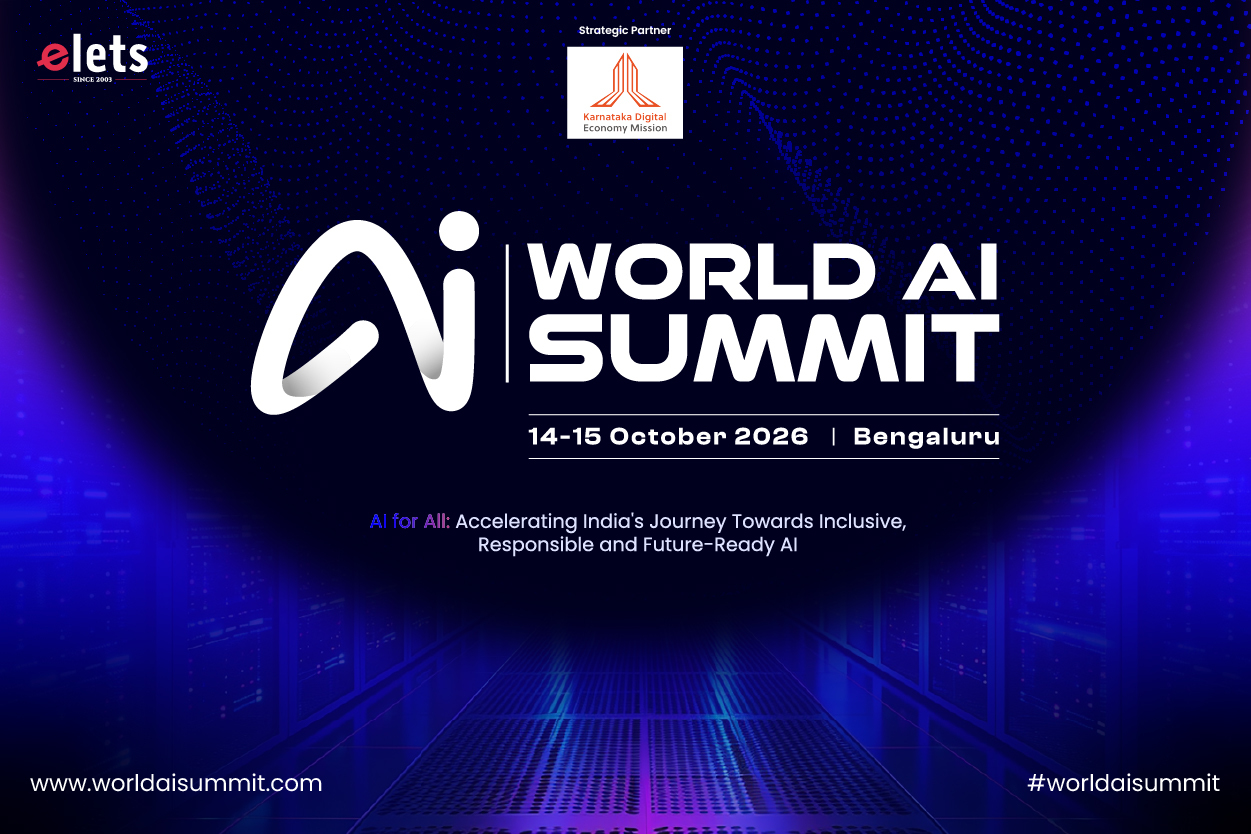
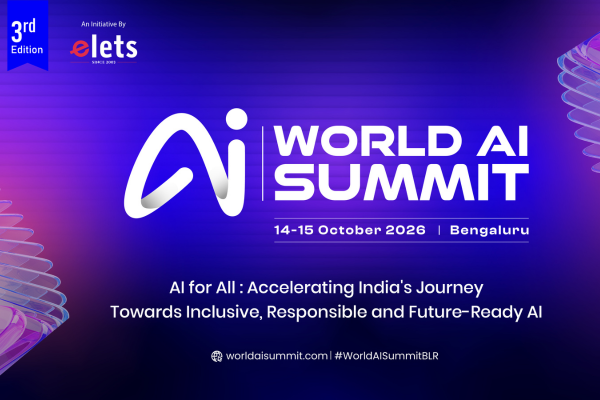
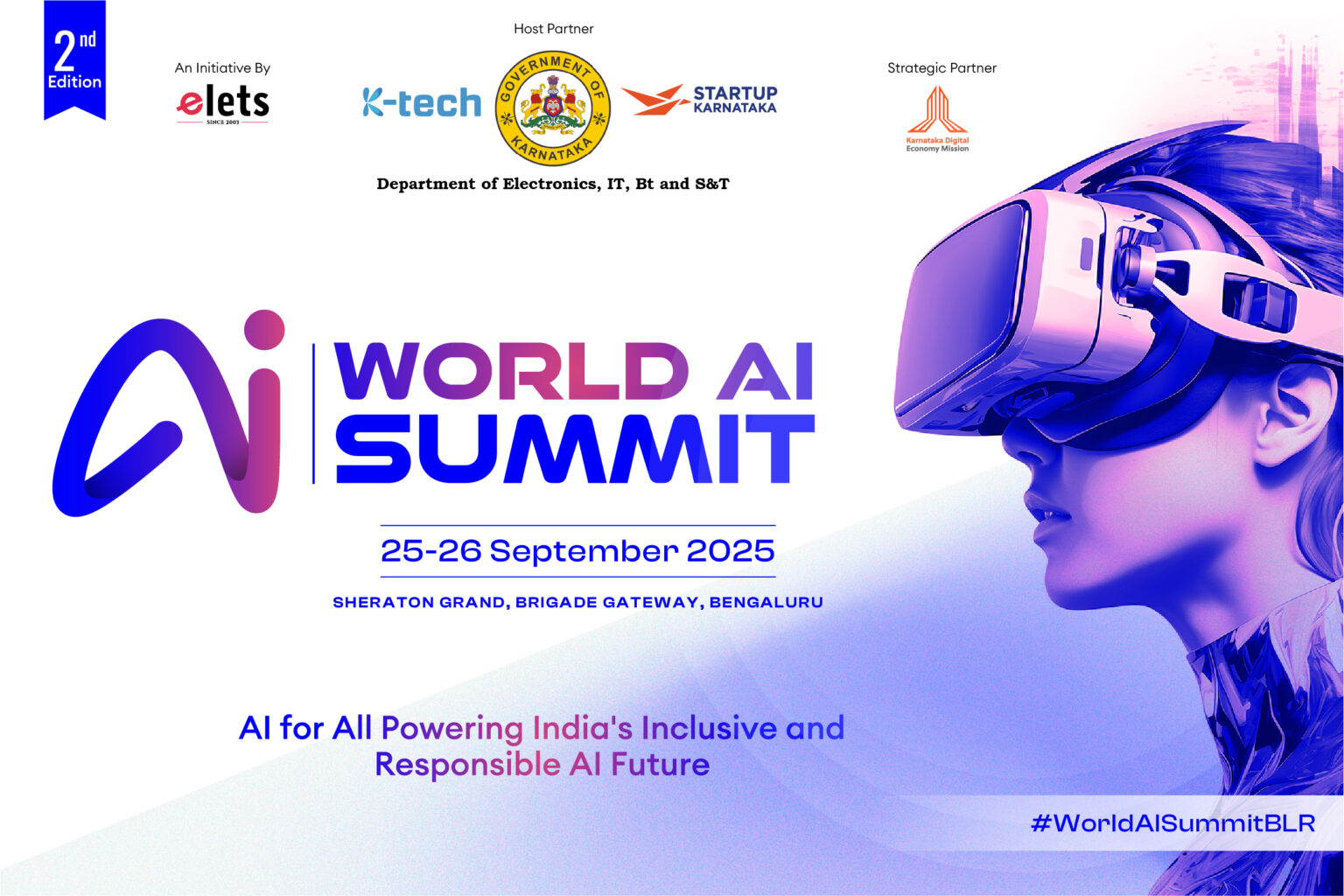
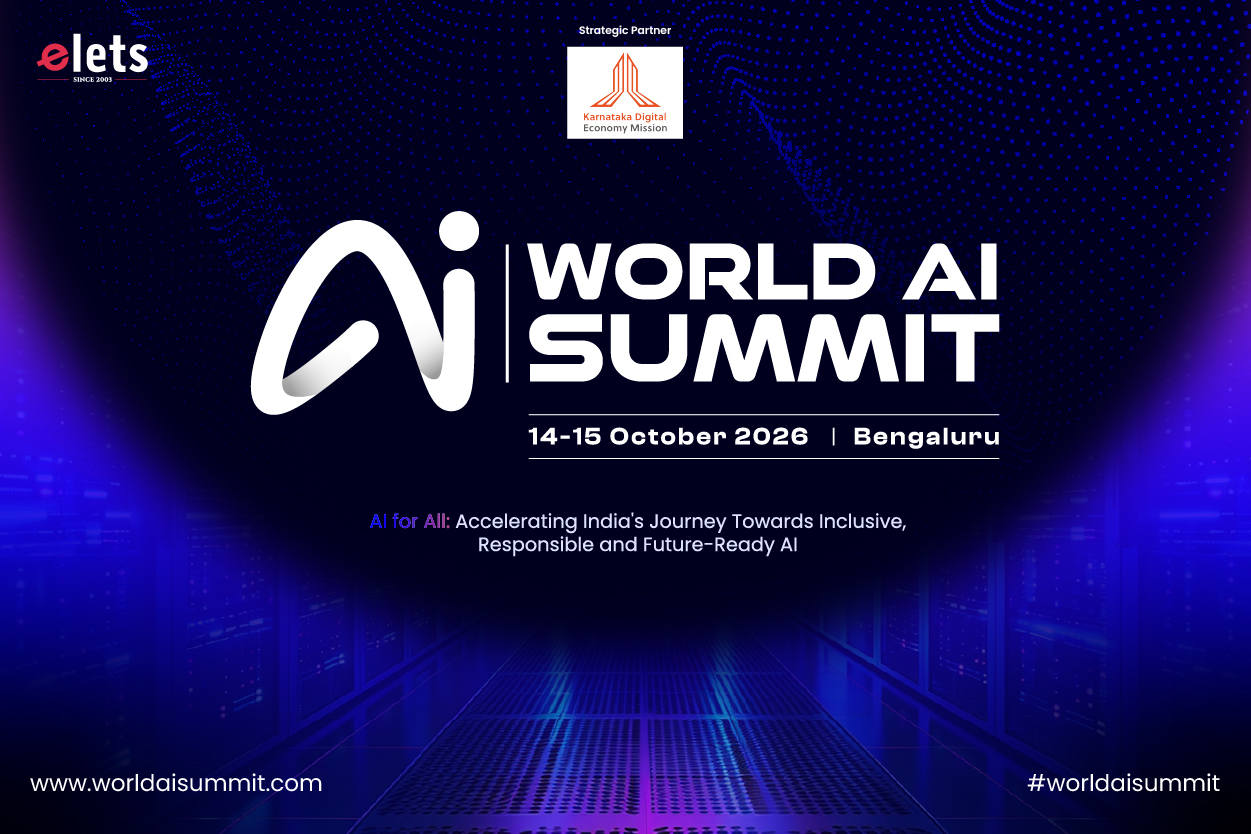
This conversation will continue to move higher up the corporate agenda: how CEOs can build organisations that are AI-ready, productive, innovative, responsible, and resilient. It is also the conversation that will take centre stage at the World AI Summit 2026, scheduled for 14–15 October 2026 in Bengaluru, bringing together enterprise leaders, policymakers, AI innovators, startups, researchers and investors to explore Generative AI & LLMs, Agentic AI, AI Infrastructure & Cloud, AI in Enterprises, AI in Government & Public Services, and AI Ethics & Regulation. The summit will provide a platform for partnerships and ideas that will shape the next chapter of AI in India and the future of enterprise AI.
The future will not belong simply to organisations that use AI. It will belong to organisations that know how to lead with it.
Be a part of Elets Collaborative Initiatives. Join Us for Upcoming Events and explore business opportunities. Like us on Facebook , connect with us on LinkedIn and follow us on Twitter.
"Exciting news! Elets technomedia is now on WhatsApp Channels Subscribe today by clicking the link and stay updated with the latest insights!" Click here!