


artificial intelligence
Indian IT Majors Bet on Governing AI Agents as Agentic AI Scales: TCS, Cognizant, HCLTech, Tech Mahindra Build Control Layers
Indian IT Majors Bet on Governing AI Agents as Agentic AI Scales: TCS, Cognizant, HCLTech, Tech Mahindra Build Control Layers
![]() By Elets News Network - 27 October 2026



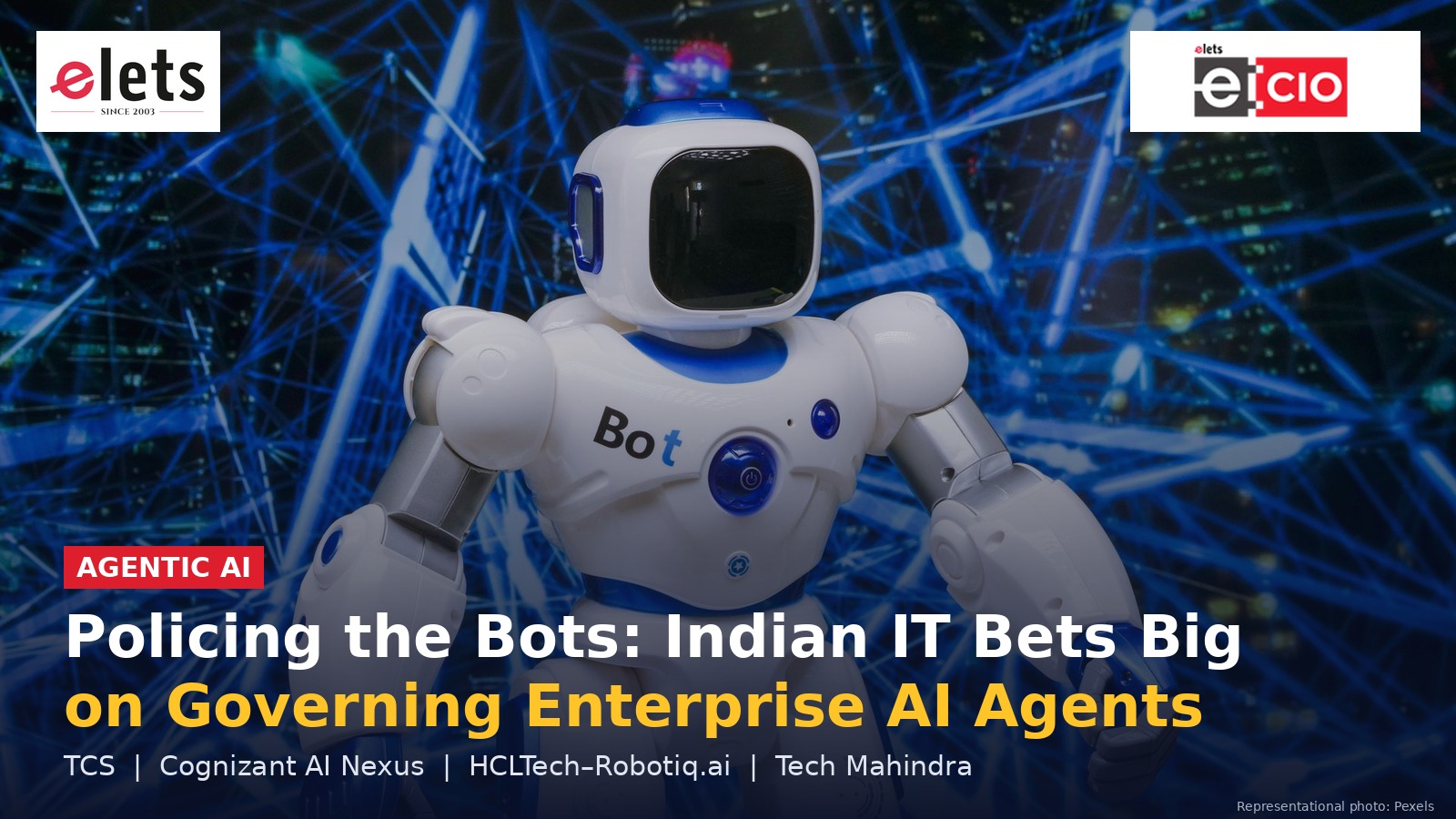
As enterprises move from AI pilots to fleets of autonomous agents that book meetings, write code and act on customer data, a new question has moved to the top of the CIO agenda: who keeps those agents in check? India’s largest IT services companies believe the answer is a fresh business line — software and services to govern, orchestrate and monitor AI agents across the enterprise.
Tata Consultancy Services (TCS), Cognizant, HCLTech and Tech Mahindra have each signalled that managing AI agents and controlling how they are used is emerging as a significant opportunity, according to a recent report in Mint. Each is taking a slightly different route to get there.
From agent sprawl to an “agentic control plane”
The concern driving demand is simple. Agents typically inherit the access rights of the application or person that deployed them, often sit inside a single vendor’s platform, and are coordinated through largely manual controls. That leaves room for duplicated work, runaway costs and, most worryingly, agents reaching into data they were never meant to see.
TCS has framed the answer as an “agentic control plane”. During its post-results analyst call on 8 October, the company’s leadership said strong AI governance on secure AI platforms is becoming a top enterprise need, with the control layer spanning not just governance but cost management, agent performance and the full agent lifecycle.
Four companies, four approaches
- Cognizant launched Cognizant AI Nexus on 23 October. The platform tracks AI spend and output quality together, turns proven IT processes into reusable templates for teams and agents, and gives every agent its own identity, permissions and memory. Every task is logged, and humans retain sign-off on key decisions and compliance checks.
- HCLTech is buying capability: on 28 September it announced its intent to acquire Croatia-based Robotiq.ai to strengthen orchestration across AI agents and enterprise applications.
- Tech Mahindra has pointed to heightened client concern over the security and reliability of agents, and says responsible AI practices — red teaming, trusted data, traceability, security and IP provenance — are built into how it designs and runs AI solutions.
- TCS is doubling down on platform software to coordinate agents and enforce their limits.
Orchestration is the next frontier
Analysts see orchestration — getting multiple agents to work together reliably on end-to-end tasks — as the next major growth area. They argue Indian services firms are well placed thanks to deep process, domain and industry knowledge, but stress that agent governance is continuous work, not a one-time project. As more agents enter production, real-time monitoring and visibility will become essential, especially in regulated sectors such as banking, insurance and healthcare.
The bigger test, industry watchers note, is whether Indian IT firms can move beyond reselling hyperscalers’ orchestration stacks to owning a clear point of view on how enterprises should govern AI across their entire estate — backed by forward-deployed talent, proprietary IP and outcome-linked commercial models rather than headcount-based billing.
What it means for CIOs
For technology leaders, the message is clear: scaling agentic AI safely will depend as much on identity, access control, audit trails and cost visibility as on model choice. Building that governance layer early — whether in-house or with a services partner — is fast becoming a prerequisite for moving agents from experimentation into core business processes.
Be a part of Elets Collaborative Initiatives. Join Us for Upcoming Events and explore business opportunities. Like us on Facebook , connect with us on LinkedIn and follow us on Twitter.
"Exciting news! Elets technomedia is now on WhatsApp Channels Subscribe today by clicking the link and stay updated with the latest insights!" Click here!