


artificial intelligence
Gyan Bharatam to Use AI to Digitise 1 Crore Manuscripts
Gyan Bharatam to Use AI to Digitise 1 Crore Manuscripts
![]() By Elets News Network - 08 November 2026


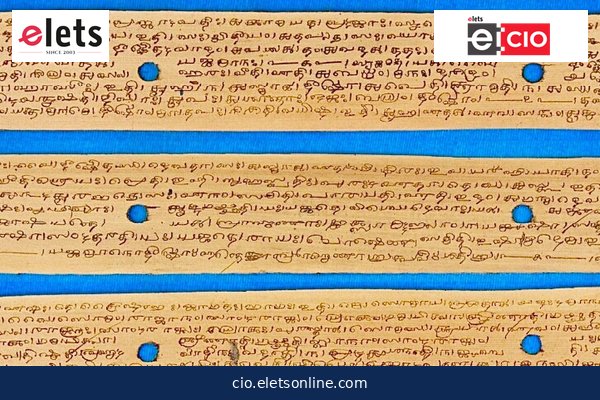
The Ministry of Culture will use artificial intelligence and machine learning to decipher, digitise and preserve more than one crore ancient manuscripts under its Gyan Bharatam mission, The New Indian Express reported on 7 November 2026. The plan centres on an AI-powered National Digital Repository with a “Talk-to-Manuscript” feature for text and voice queries.
The project is one of the largest public-sector AI deployments built around Indian languages and scripts, and it sits alongside other sovereign language efforts such as the IndiaAI Mission’s Soket EKA-1 and ZenteiQ Dhir foundation models and the CIIL Anuvani speech AI ecosystem for 22 Indian languages.
How will Gyan Bharatam use AI on manuscripts?
Officials said advanced optical character recognition (OCR) and handwritten text recognition (HTR) will turn manuscript images into searchable digital text while keeping the original structure, including headings, marginal notes and illustrations. The AI layer is expected to transcribe handwritten pages, translate texts and help identify their authors.
The ministry also wants the system to trace the provenance of manuscripts, reconstruct faded passages and find links between manuscripts held by different institutions and private collectors. According to officials, it is in the process of engaging an expert technology firm to build the platform.
Guardrails: citations for every AI answer
A notable design rule is grounding. Every AI-generated response on the platform will have to be backed by validated manuscript records and include page-level citations and quotations from the original sources. That approach mirrors the retrieval-grounded answers enterprises now demand from generative AI, and it addresses the risk of a model inventing content about historical texts.
The Gyan Bharatam web portal already lists early AI tools, according to the Press Information Bureau: Gyan Mitram, an AI knowledge interface; Pandulipi Darpan for script recognition, transliteration and translation; and a BharatiyaGPT conversational layer for multilingual text and voice access.
Scale and budget of the mission
Announced in the Union Budget 2025, Gyan Bharatam aims to survey, preserve, digitise and disseminate India’s manuscript heritage. The Standing Finance Committee has sanctioned Rs 491.66 crore for 2025 to 2031. More than 1.25 crore manuscripts in many languages have been reported on the portal launched in September 2025, and 11.53 lakh have been published so far, the report said.
The ministry has also proposed new conservation laboratories for palm leaf, birch bark and paper manuscripts, and a network of trained volunteers called Pandulipi Mitras across about 100 districts.
Why it matters for India’s AI ecosystem
Digitised and machine-readable manuscripts could become a rare, high-quality corpus of Indic scripts and classical languages, useful for training and evaluating Indian language models under consent and access rules. Access will follow custodians’ rights, with sensitive or restricted material subject to conditions. It also adds to the government’s push on trusted data frameworks such as MeitY’s DEPA for AI Training and public AI platforms like AIKosh, where CoRover listed its BharatGPT models.
Key takeaways
- Gyan Bharatam will use OCR, HTR and AI to digitise more than one crore manuscripts.
- A National Digital Repository will offer Talk-to-Manuscript queries with page-level citations.
- Rs 491.66 crore is sanctioned for 2025 to 2031, and a technology firm is being engaged.
FAQ
What is the Gyan Bharatam National Digital Repository?
It is a planned AI-powered platform of the Ministry of Culture that will host digitised manuscripts and let users search and ask questions by text or voice.
How will the AI avoid wrong answers?
Each AI-generated response must be supported by validated manuscript records and include page-level citations and quotations from the original source.
Be a part of Elets Collaborative Initiatives. Join Us for Upcoming Events and explore business opportunities. Like us on Facebook , connect with us on LinkedIn and follow us on Twitter.
"Exciting news! Elets technomedia is now on WhatsApp Channels Subscribe today by clicking the link and stay updated with the latest insights!" Click here!