


artificial intelligence
Zoho Turns Analytics Into an Agentic Platform, Putting Six AI Agents and a Business Context Layer at the Core
Zoho Turns Analytics Into an Agentic Platform, Putting Six AI Agents and a Business Context Layer at the Core
![]() By Elets News Network - 31 October 2026


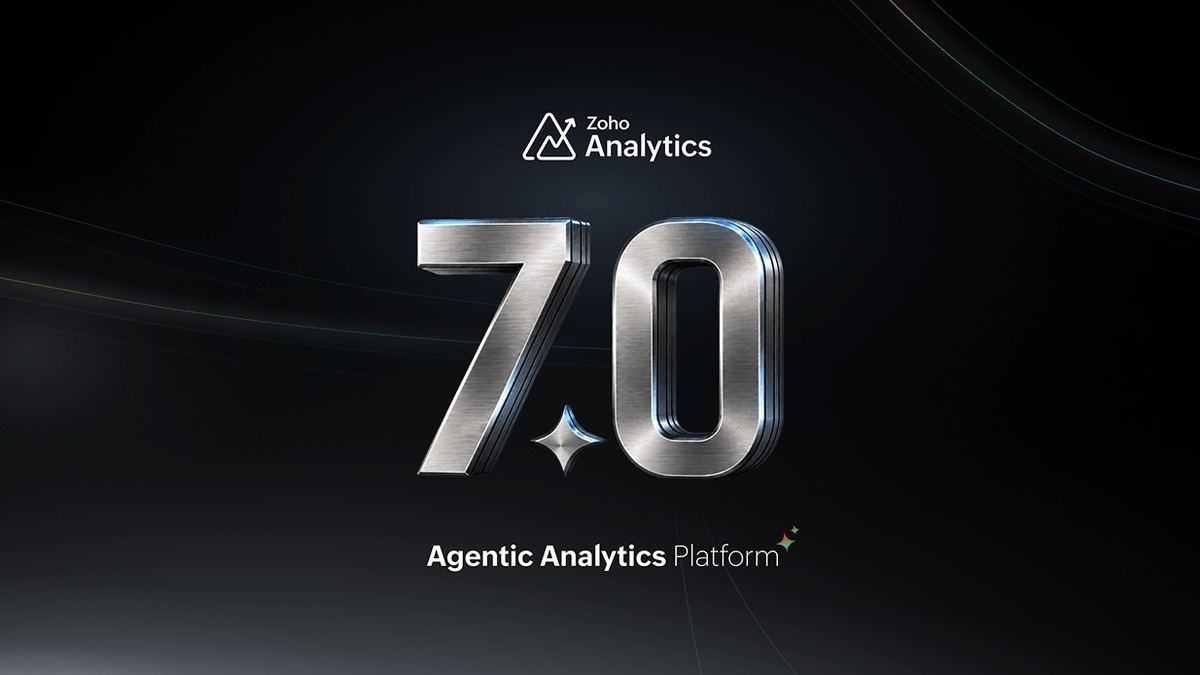
Zoho has rebuilt its business intelligence product, Zoho Analytics, around AI agents. The new release, branded Zoho Analytics 7.0, moves the platform away from being a self-service tool for building reports and dashboards and repositions it as an agentic analytics platform, where agents do much of the analytical work and users steer them in plain language.
The launch is a clear sign of where enterprise BI is heading: from charts that people read to agents that answer, build and act, as long as they are grounded in the company’s own definitions and kept within governance limits.
One conversation, six specialist agents
At the centre of the release is Ask Zia, Zoho’s AI assistant, which now works as a super agent coordinating six sub-agents across the analytics workflow:
- Data Analysis Agent answers business questions with descriptive, diagnostic and prescriptive insights, explaining what happened, why, and what to do next.
- Visualization Agent builds and refines reports and dashboards from a written description.
- Data Preparation Agent cleans, joins and transforms data, and can turn a plain-language description into an editable, schedulable pipeline.
- Formula Agent writes reusable business metrics such as gross margin or churn rate.
- DSML Coding Agent trains and runs classification, regression and forecasting models in Python inside Code Studio.
- SQL Agent writes, explains, fixes and optimises queries.
All six share the same conversation context and memory, so a user can move from a question to a pipeline without starting over. Ask Zia can run on Zoho’s own LLM, on supported third-party models such as OpenAI’s, or with a customer’s own API key.
Giving agents business context
Zoho’s bet is that agents fail when they do not know what a company means by terms like “active customer” or “revenue”. The release makes an ontology and a semantic layer native to Zoho Analytics, so customers do not need a separate data warehouse to define them. The ontology maps entities such as customers, orders and vendors and how they relate, while the semantic layer acts as a business glossary that every agent and report uses. A third control, scoping, limits an agent to the data and dashboards relevant to a particular team.
Custom agents, MCP and Claude
Beyond the built-in agents, organisations can pick ready-made agents from a gallery or build custom agents grounded in their own data, semantic model and knowledge base, with instructions and guardrails that set their limits. These agents can connect to MCP servers, web search and other tools.
Zoho is also opening the platform to outside AI. A new Zoho Analytics MCP server, available hosted or self-managed, lets external assistants and agents manage data, build models and access semantic definitions. Zoho has added a connector for Claude Desktop and a plug-in for Claude’s command-line tool, a new CLI for developers, and the option to embed agents in customers’ own apps and portals under their brand.
Governance for an agent-heavy stack
With more agents in play, the release adds controls for administrators: a central Data Catalog with lineage and data-quality checks, sandboxes for testing reports and agents before production, row- and column-level data policies, and AI observability that shows which agents ran, who used them, what data they touched, how they answered, and what AI usage is costing across teams.
The update also brings more than 30 new connectors, including SAP S/4HANA, PayPal, Twilio, Notion and Supabase, adding to the 500-plus already supported, along with scenario analysis, automated anomaly detection, Jupyter notebooks and pixel-perfect reporting.
Pricing and roll-out
Zoho says Zoho Analytics pricing is unchanged, with every plan now including monthly Zoho LLM credits and a one-time pool of credits for external AI models. The new capabilities are live in the cloud and rolling out gradually across regions, with previews of the ontology, semantic model and pixel-perfect reporting reaching users globally over the next four to eight weeks. The on-premise edition will get the updates in the first quarter of 2027.
Why it matters
For Indian enterprises and mid-market firms, many of which already run on Zoho’s suite, the release shows a homegrown SaaS company competing directly in the agentic BI race against global platforms. Its emphasis on shared business definitions and observability addresses the two concerns CIOs raise most about AI agents in analytics: whether the answers can be trusted, and whether anyone can see what the agents are doing.
Be a part of Elets Collaborative Initiatives. Join Us for Upcoming Events and explore business opportunities. Like us on Facebook , connect with us on LinkedIn and follow us on Twitter.
"Exciting news! Elets technomedia is now on WhatsApp Channels Subscribe today by clicking the link and stay updated with the latest insights!" Click here!