




artificial intelligence
Madras HC Orders Keralam to Install AI Elephant Detection Cameras
Madras HC Orders Keralam to Install AI Elephant Detection Cameras
![]() By Elets News Network - 22 November 2026


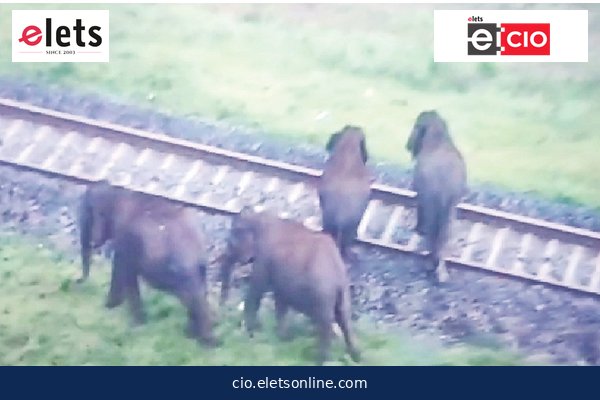
The Madras High Court has directed the Keralam government to install AI elephant detection cameras along railway tracks that pass through forest areas within two months, to stop wild elephants from being killed by trains. The order, reported on 22 November 2026, follows elephant deaths on the Walayar-Palakkad railway stretch near the Tamil Nadu border.
A division bench of Justices N Sathish Kumar and G K Muthukumar issued the direction while hearing a writ petition filed by S Muralidharan seeking protection of elephant corridors in Tamil Nadu, The New Indian Express reported. The court based its order on the results of an AI-based elephant detection system already running in the Madukkarai forest range of Coimbatore district.

How the Madukkarai AI elephant detection cameras work
The Tamil Nadu Forest Department system uses 24 thermal and standard cameras mounted on 12 high-mast towers along a vulnerable seven-kilometre stretch of two railway lines in the Madukkarai range. When the cameras spot an elephant near the tracks, alerts reach a round-the-clock control room, which relays them to frontline forest staff and to station masters, who warn loco pilots to slow down or stop.

- Coverage: towers placed about 500 metres apart, watching roughly 150 metres on either side of the track, according to the IndiaAI portal.
- Alerts: more than 7,116 real-time alerts and 3,281 instances of trains slowing or stopping, as shared by Additional Chief Secretary Supriya Sahu in July 2026.
- Outcome: about 9,481 safe elephant crossings and zero elephant deaths on the monitored stretch.
The system has also picked up deer, gaur and leopards, and the forest department has added AI-powered drones for wider landscape surveillance.

What the court asked Keralam to do
Besides the two-month deadline for AI cameras, the bench noted that the Keralam government had yet to decide on a third railway underpass proposed by the Railways for elephant movement. “We make it clear that, after all, it is only to prevent the death of animals, especially elephants, on the railway tracks,” the bench said, adding that it expected the state to agree to the proposal within two weeks. The matter will be heard next on 5 February 2027.
Why it matters for AI in public services
The order is a rare case of a court pointing to a working AI deployment as the standard a state should match. It adds to a growing list of Indian public-sector computer vision and decision-support projects, from the Indian Railways AI war room that tracks festive crowds live to the AION decision intelligence platform for power, floods and police and the BluVaani AI call dispatcher for police helplines.
It also highlights demand for rugged edge AI hardware that works at night and in remote terrain, a space where Indian startups such as Bharat Semi are building AI-enabled image sensors.
Key takeaways
- The Madras High Court has given Keralam two months to install AI-enabled cameras on forest railway stretches.
- The order cites Tamil Nadu’s Madukkarai system, which has recorded zero elephant deaths on its monitored stretch.
- The court also wants Keralam to decide on a third elephant underpass within two weeks; the next hearing is on 5 February 2027.
FAQ
What are AI elephant detection cameras?
They are thermal and standard cameras linked to AI software that detects elephants near railway tracks and sends real-time alerts so trains can slow down or stop.
Where is the Madukkarai system located?
It covers a seven-kilometre stretch of railway lines in the Madukkarai forest range of Coimbatore district, Tamil Nadu, near the Keralam border at Walayar.
Featured image: Wild elephants near a railway track in the Coimbatore region. Photo via DT Next.
Be a part of Elets Collaborative Initiatives. Join Us for Upcoming Events and explore business opportunities. Like us on Facebook , connect with us on LinkedIn and follow us on Twitter.
"Exciting news! Elets technomedia is now on WhatsApp Channels Subscribe today by clicking the link and stay updated with the latest insights!" Click here!