



artificial intelligence
Human Oversight of AI Must Stay Central, India Tells UN
Human Oversight of AI Must Stay Central, India Tells UN
![]() By Elets News Network - 25 November 2026


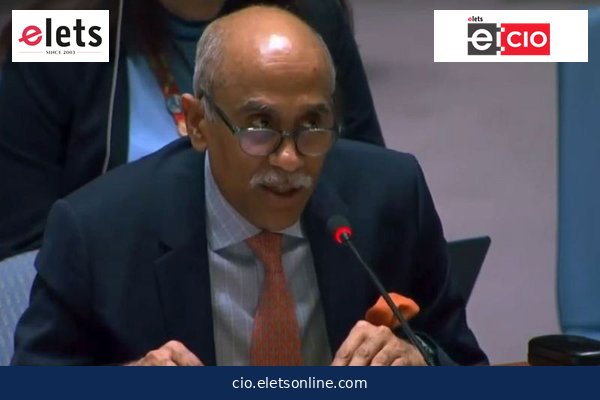
India has told the United Nations Security Council that human judgement and oversight must stay at the centre of how artificial intelligence is used in conflict. Speaking at a high-level open debate in New York on 24 November 2026, India’s Permanent Representative to the UN, Ambassador Harish Parvathaneni, said responsibility for autonomous weapons systems “must always rest with humans”.
The debate, convened by Latvia on the theme “Conflict Resolution in an Era of Rapid Technological Change”, drew statements from member states on AI-assisted targeting, autonomous systems and cyber threats, according to the UN meetings coverage. India’s statement set out four considerations for how the world should respond.

Four principles India set out at the UN
- Technology as a tool for peace: AI analytics, satellite imagery and digital platforms can strengthen early warning, situational awareness, mediation and peacekeeping. “Technology is a means to achieve human-directed objectives and goals; it is not an end in itself,” Parvathaneni said.
- Responsible and human-centric use: emerging technologies in conflict must respect sovereignty and international law and protect civilians, peacekeepers and humanitarian staff. India will keep addressing lethal autonomous weapons within the Convention on Certain Conventional Weapons (CCW).
- Misuse by terrorists: “The risks associated with AI are real, and we must address them without any hesitation,” he said, warning that incomplete, inaccurate or manipulated data can undermine decision-making.
- No new digital divide: India flagged technology denial through export controls and licensing, and a tendency to treat the Global South as “mere consumers” of AI rather than stakeholders in how it is built and regulated.
Bias, dignity and the New Delhi Declaration
Parvathaneni also cautioned that AI systems can carry biases of gender, language and socio-economic background. “AI must not reduce human beings to mere data points or raw material,” he said. He pointed to the Information Technology Act and its rules as India’s domestic protection against unauthorised access, data tampering and disruption of computer systems, including during armed conflict.

He cited the AI Impact Summit held in New Delhi in February 2026, whose New Delhi Declaration was endorsed by more than 90 countries and focused on democratising access to AI resources, trustworthy systems, human capabilities and AI for social good. India backed inclusive global cooperation on technology governance through the UN and repeated its call for Security Council reform, as reported by ANI via The Tribune.

Why it matters for Indian CIOs
The human-in-the-loop principle India is pressing abroad mirrors the direction of its policy at home. MeitY is preparing an AI consultation paper built around safety and risk mitigation, and the government has weighed pre-release safety checks for frontier AI models. For enterprises deploying AI agents, clear human accountability, data integrity and bias testing are fast becoming expected governance controls, in line with frameworks such as IIT Madras’s responsible AI proposal.
Key takeaways
- India told the UN Security Council that responsibility for autonomous weapons must always rest with humans.
- Its four principles cover AI for peacekeeping, responsible use under international law, terrorist misuse and the Global South divide.
- India cited the New Delhi Declaration, endorsed by more than 90 countries, as a model for inclusive AI governance.
FAQ
What did India say about AI at the UN Security Council?
India said human judgement and oversight must remain central to the use of AI in conflict, and that responsibility for autonomous weapons must always rest with humans.
Who delivered India’s statement?
Ambassador Harish Parvathaneni, India’s Permanent Representative to the United Nations, delivered it at the open debate on 24 November 2026.
Featured image: Ambassador Harish Parvathaneni at the UN Security Council. Photo: ANI
Be a part of Elets Collaborative Initiatives. Join Us for Upcoming Events and explore business opportunities. Like us on Facebook , connect with us on LinkedIn and follow us on Twitter.
"Exciting news! Elets technomedia is now on WhatsApp Channels Subscribe today by clicking the link and stay updated with the latest insights!" Click here!