


artificial intelligence
India Has $300 Billion in Data Centre Pledges but GPUs at 20% Use; Its Real AI Edge Is Services, Says Rhodium Group
India Has $300 Billion in Data Centre Pledges but GPUs at 20% Use; Its Real AI Edge Is Services, Says Rhodium Group
![]() By Elets News Network - 02 November 2026


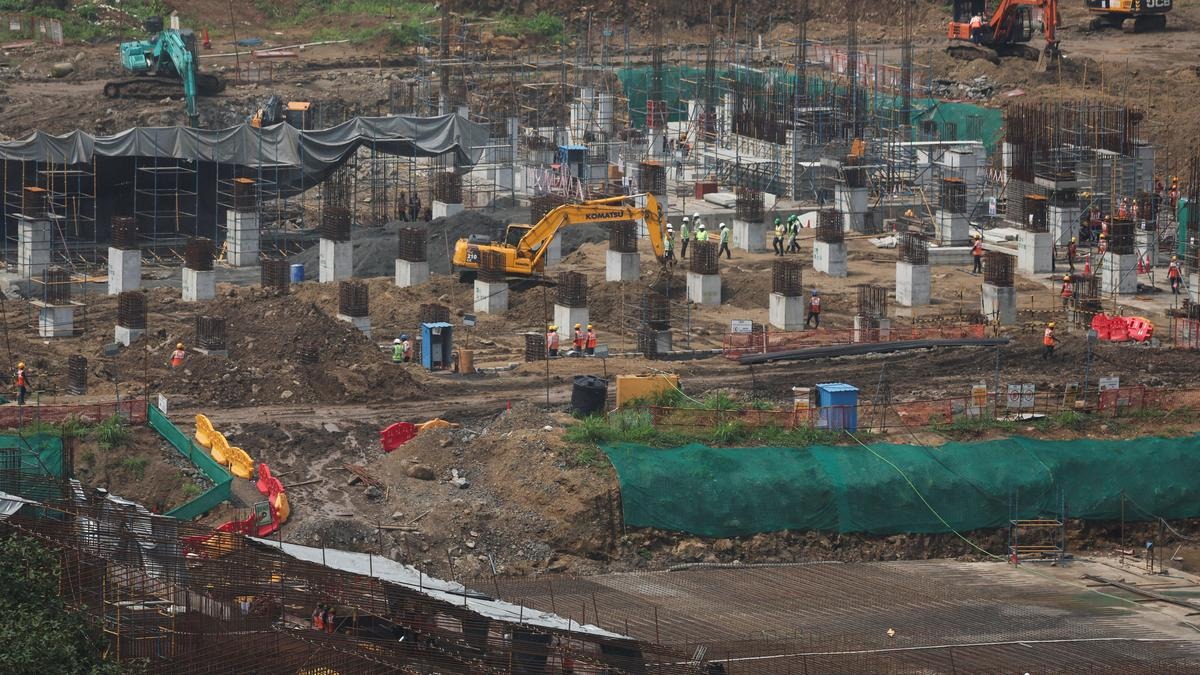
India has drawn more than $300 billion in data centre investment commitments in a single year, but a new report from US-based research firm Rhodium Group argues that the country’s most realistic AI opportunity lies somewhere else entirely: in the services layer that Indian IT companies already know how to run.
The report, titled ‘Hyperscaler Heaven? A reality check on India’s AI ambition and geopolitical alignment’ and written by Ankit Tiwari and Reva Goujon, examines four pillars of India’s AI push: the data centre build-out, the sovereign model strategy, the AI services play of the IT sector and India’s geopolitical positioning. Its central finding, as reported by The Hindu BusinessLine on 2 November, is that India is strongest where its public AI strategy says the least.
Capacity is rising faster than domestic demand
Operational data centre capacity in India is projected to triple by 2030, and could grow as much as six-fold. Rhodium’s contribution is to look at who is actually using it. According to the report, GPUs subsidised under the IndiaAI Mission are reportedly running at about 20% utilisation, even though they are priced well below market rates.
The picture is similar in the private market. Yotta, India’s largest GPU-as-a-service provider, is estimated to earn around 80% of its revenue from overseas customers, and has agreed to sell capacity through Nvidia’s DGX Cloud Lepton marketplace. Meanwhile, most domestic enterprise AI workloads still run on global cloud platforms rather than on Indian servers. In short, the infrastructure is being built in India, but much of it is being filled by foreign demand.
The jobs promise behind state incentives
That gap has political consequences. States have offered land, power waivers and capital subsidies to attract data centres, largely on the promise of employment. Rhodium points out how far those promises can drift from reality: Andhra Pradesh’s IT Minister cited 2 lakh jobs from a single project, while the state’s own agency estimated around 200 direct operational roles. Construction employment peaks during the build phase and then fades.
The report also notes that Maharashtra revised its green energy incentive framework within five months of rolling it out, and that Tamil Nadu and Karnataka have announced similar revisions, signalling that pressure on state incentive policies is likely to grow.
Sovereign models: sound logic, small market
On foundation models, Rhodium does not question the technical case. Models trained natively on Indian languages such as Hindi, Tamil or Bengali handle queries more efficiently than models that translate on the fly, and Sarvam AI‘s 105-billion-parameter model is the most visible result of the IndiaAI Mission’s lab programme so far.
The concern is economics. The report argues that the domestic market for Indic-specific AI products is not large enough to fund frontier model development on its own, while better-funded American and Chinese labs keep narrowing the Indic performance gap. That leaves an open question for policymakers: whether public money for sovereign models is solving a competitive problem or a political one.
Where India’s real advantage sits
The most constructive part of the report focuses on AI services. TCS and Infosys have reported annualised AI services revenue equal to about 7.5% and 8% of total revenue respectively, growing at double-digit rates even as overall IT revenue growth slipped to a six-year low.
Rhodium highlights the forward-deployed engineer as the key mechanism: a technologist who sits inside a client organisation and adapts AI systems to its specific data, workflows and legacy stack. An entry-level forward-deployed engineer in India costs less than a tenth of a comparable US hire.
The report links this to a wider problem in enterprise AI. It cites a 2025 MIT study which found that 95% of generative AI pilots at large organisations fail because of integration gaps and missing context, not weak models. Closing that gap depends on deep knowledge of each client’s systems, which Indian IT firms have built up over decades. Infosys puts the addressable AI services market at $300–400 billion by 2030.
Rhodium also argues that India’s claim of neutrality in the US-China technology contest has, in practice, already been settled at the infrastructure level, citing India’s alignment of semiconductor export controls with the US, trusted-source rules for telecom networks and its stance in spectrum forums. It reads recent Chinese moves, including recalling engineers from Foxconn plants in India and restricting some equipment and rare earth exports, as signs that Beijing has noticed.
What it means for India’s CIOs
For technology leaders, the report is a useful reality check. Abundant, subsidised GPU capacity at home is available but under-used, which is an opening for enterprises ready to move workloads closer to home. The bigger lesson, though, is that AI value is created in integration and deployment. As Rhodium puts it, the services layer is where India’s opportunity is largest, and also where its policy strategy is thinnest.
The conversation on India’s AI infrastructure, sovereign models and enterprise adoption continues at the World AI Summit by Elets.
Be a part of Elets Collaborative Initiatives. Join Us for Upcoming Events and explore business opportunities. Like us on Facebook , connect with us on LinkedIn and follow us on Twitter.
"Exciting news! Elets technomedia is now on WhatsApp Channels Subscribe today by clicking the link and stay updated with the latest insights!" Click here!