


artificial intelligence
DeepSeek Releases Open-Source ‘Super-Agent’ That Codes Without Being Asked, Taking Aim at Anthropic’s Claude Code
DeepSeek Releases Open-Source ‘Super-Agent’ That Codes Without Being Asked, Taking Aim at Anthropic’s Claude Code
![]() By Elets News Network - 02 November 2026


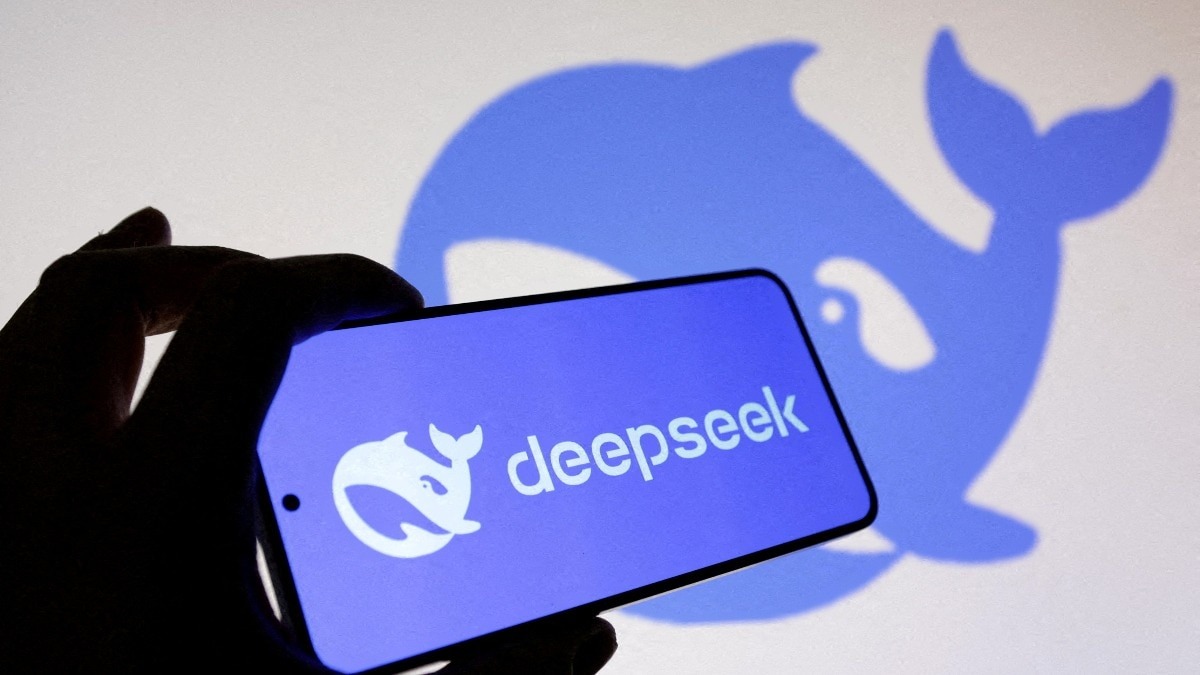
Chinese AI lab DeepSeek has released Super-Agent, an open-source prototype of a coding agent that does not wait to be prompted. Instead of answering one question at a time, it watches a team’s GitHub activity and developer chats, spots work it has been allowed to take on, and comes back with results such as a pull request. The move puts DeepSeek in direct competition with Anthropic’s Claude Code, one of the most widely used AI coding tools among developers, including in India.
The release was announced on WeChat on 31 October by DeepSeek’s recently formed Harness team, as reported by Bloomberg. The code, published on GitHub as dsh-superagent-prototype under the permissive MIT licence, comes with a design paper titled Exploring Super-agent Design: Towards a More Autonomous Agent System.
What is DeepSeek’s Super-Agent?
Super-Agent is a proactive coding agent built for a single GitHub repository and packaged as a bundle for DeepSeek Harness, the company’s agent framework. It listens to GitHub and, optionally, to the Feishu workplace chat app. When an authorised team member asks it for something, it opens a work item, which the project calls a “Ticket”, handles it in its own isolated session and directory, and replies in the original conversation. A local web panel lists only the items that need a human decision.
DeepSeek sums up the design rule in its user manual: the agent should “take as little human attention as possible, and give as much value as possible.” In practice, that means it confirms a request once, works quietly, and speaks again only when it has a result, a question or a failure to report.
How the router-worker design works
The prototype splits the job into two layers. A long-running Router handles conversation and decides what to dispatch, while separate Worker sessions do the actual coding in parallel. Later comments on a pull request are routed back to the right Worker automatically, so developers do not need to tag the agent again.
Unprompted work is tightly gated. Teams can set the agent to one of three modes: off, observe (the default, in which it only records what it would have done) or auto. It acts on its own only when a rule written by the team allows it.
In DeepSeek’s own simulation, the multi-session design finished tasks much faster under a noisy stream of messages, with 95th-percentile completion time of 15.7 minutes against 29.5 minutes for a single-session agent, roughly 1.9 times quicker. DeepSeek is candid about the limits: the test used synthetic messages and simulated tools, and real-world code quality was not measured.
A research prototype, not a product
DeepSeek stresses that Super-Agent is “research code, not production-ready software”. The repository notes that much of it was itself written by coding agents, that it may contain bugs, and that teams should review and adapt it before use. Some ideas discussed in the design paper, including an external watchdog and an asynchronous reasoning loop, are not yet implemented.
The launch follows DeepSeek’s recent V4.1-Flash models, which support long-context workloads with sharply lower memory needs, and a reported fundraise of about 100 billion yuan (roughly $15 billion) backed by investors including CATL and Tencent, according to Bloomberg, as the company prepares for a planned listing.
Why it matters for India’s developers and CIOs
India has one of the world’s largest developer populations and is among the fastest adopters of AI coding assistants, from Claude Code and GitHub Copilot to OpenAI’s Codex. An MIT-licensed agent that runs on a team’s own machines, and can be pointed at whichever model a company chooses, gives Indian IT services firms, global capability centres and startups another option for experimenting with autonomous engineering without locking into a single vendor.
It also raises governance questions that CIOs will recognise. An agent that reads team chats and acts on its own needs clear permissions, audit trails and data controls, which is exactly why DeepSeek ships it in observe-only mode by default. Enterprises weighing Chinese-origin AI tools will also want to review where code and conversations flow before any pilot.
For now, Super-Agent is a signal rather than a finished tool: the race to build AI that behaves like a quiet, dependable member of the engineering team is moving from chat windows into the workflow itself.
Be a part of Elets Collaborative Initiatives. Join Us for Upcoming Events and explore business opportunities. Like us on Facebook , connect with us on LinkedIn and follow us on Twitter.
"Exciting news! Elets technomedia is now on WhatsApp Channels Subscribe today by clicking the link and stay updated with the latest insights!" Click here!