


artificial intelligence
Madras High Court Orders FIR Over AI-Generated Library Books
Madras High Court Orders FIR Over AI-Generated Library Books
![]() By Elets News Network - 11 November 2026


The Madurai Bench of the Madras High Court on 10 November 2026 ordered Tamil Nadu’s Directorate of Vigilance and Anti-Corruption (DVAC) to register an FIR over the purchase of fake, plagiarised and AI-generated books for public libraries. It also froze the accounts of publisher Agal Vilakku Publication and its proprietor, Mohan.
The order makes AI-generated text a question of quality and accountability in public procurement, not just a technology debate. It arrives as the Centre weighs tougher rules on synthetic content, including the safeguards against AI deepfake misuse that Amit Shah promised earlier this month.
What the Madras High Court ordered
A Division Bench of Justice G.R. Swaminathan and Justice M.D. Sumathi passed the directions while hearing a contempt petition, Ramasubbu v. K. Gopal. The petition said the state had ignored the court’s 19 June 2024 judgment on safeguards for buying library books. The main directions are:
- DVAC must register an FIR at once against unknown public servants, as the facts attract the Bharatiya Nyaya Sanhita and the Prevention of Corruption Act.
- Bank accounts of Agal Vilakku Publication, its proprietor and others involved must be frozen.
- Librarians must list the suspect books and withdraw them from readers.
- The Director of Public Libraries must name the officials responsible, disclose the exact amount spent and file an affidavit on the sequence of events.
The Bench read Rule 18(4) of the Tamil Nadu Public Libraries Rules, 1950, which bars books of “doubtful taste”, as covering such titles. “AI-generated and plagiarised works also would fall within this ambit,” the court said.
How the AI-generated books came to light
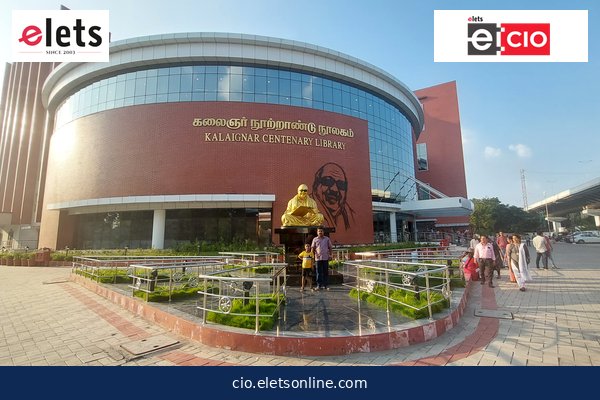
Writer Perumal Murugan first flagged poor-quality titles, doubtful authorship and AI-written content in books bought for Periyar Arivulagam, a new library in Coimbatore. Economist Jean Drèze then said a book carrying his name, “Democracy and People’s Right in the Contemporary World”, found in Madurai’s Kalaignar Centenary Library, was fake. Works falsely credited to Tamil poet Subramania Bharati were also found on library shelves.
The state government has accepted the failure, cancelled the purchase orders and started a DVAC inquiry.
What the state told the court on 11 November
At the next hearing on 11 November 2026, State Public Prosecutor John Sathyan said DVAC would file a “fully structured” FIR within four days and that accounts holding about ₹22.2 lakh had been frozen. Director of Public Libraries R.V. Shajeevana said 1,700 of 2,237 recommended Agal Vilakku titles were bought for Periyar Arivulagam at about ₹17 lakh.
The Bench criticised the state for failing to name a single official in 24 hours and listed the matter for 16 November 2026. Details of the hearing are in Bar and Bench’s report on the 11 November hearing, and the full set of directions is summarised in Verdictum’s account of the 10 November order.
Why it matters for AI governance and public procurement
Generative AI makes it cheap to produce book-length text under any name, and this case shows how such content can slip through a purchase process built for printed works. For technology leaders in government and enterprises, the lesson is that content bought from vendors now needs checks on authorship and origin, not just price and format.
India is still drafting how platforms should handle synthetic content, including whether to create a separate legal category for AI intermediaries under the proposed AI law. Regulators are also tightening oversight elsewhere, such as the CERT-In AI security audit rules with six-hour reporting. Tamil Nadu itself has backed AI adoption, including the state government’s AI lab with Google in Chennai.
Key takeaways
- The Madras High Court on 10 November 2026 ordered an FIR over fake, plagiarised and AI-generated books bought for Tamil Nadu’s public libraries.
- The court ruled that AI-generated works fall under the rule barring library books of “doubtful taste”.
- Accounts holding about ₹22.2 lakh have been frozen, and the next hearing is on 16 November 2026.
FAQ
What is the Tamil Nadu library books case about?
It concerns books with false authorship, copied text and AI-generated content bought with public money for libraries such as Periyar Arivulagam in Coimbatore.
Did the court ban AI-generated books in libraries?
The court said AI-generated and plagiarised works fall under the existing rule against books of “doubtful taste” in the Tamil Nadu Public Libraries Rules, 1950, so they should not be bought for public libraries.
Featured image: Kalaignar Centenary Library, Madurai. Photo: Ramyamani91 via Wikimedia Commons (CC BY-SA 4.0)
Be a part of Elets Collaborative Initiatives. Join Us for Upcoming Events and explore business opportunities. Like us on Facebook , connect with us on LinkedIn and follow us on Twitter.
"Exciting news! Elets technomedia is now on WhatsApp Channels Subscribe today by clicking the link and stay updated with the latest insights!" Click here!