


Article
The real-world impact of data breaches on consumer trust and business continuity
The real-world impact of data breaches on consumer trust and business continuity
![]() By cioNetworks - 15 January 2026
By cioNetworks - 15 January 2026


The amount of digital data businesses generate today is unmatched. Every transaction, operational procedure, customer engagement, or structured initiative adds to an archive of structured and unstructured data. The more valuable this data becomes, the higher the risk of it being identified and exploited by malicious actors. When a breach hits, it is not only about compromised data. It is about broken trust, interrupted services, regulatory pressure, and, in many cases, a hit to business continuity that can take months—or longer-to recover from. The real-world effects of data breaches go far beyond IT. It touches every corner of an organization, with sectors like Healthcare (21.82%) and BFSI (17.38%) among the most heavily targeted.
When trust breaks, so does the business
When a company suffers a data breach, the result reaches well beyond the records taken and downtime. It’s an operational and reputational problem that could take years to recover from. Businesses invest years in building relationships with customers and releasing new features. A data breach can turn that progress overnight. This includes systems that can go offline, critical services can be impacted, and teams can be diverted from growth priorities to manage a full-scale incident. Also, just when the business thinks it’s over, the impact can extend to regulatory oversight, legal liability, and mounting costs, including fines and penalties.
Above all, the most damage comes from loss of continuity and trust. Research indicates that nearly 70% of consumers stop doing business with a brand after their data is compromised. Rebuilding that trust requires transparency, investment, and time, and usually does not happen overnight.
This new reality calls for a proactive mindset. Today, security needs to be treated as a driver of resilience and growth, not just a compliance requirement. Adopting privacy-enhancing technologies such as data masking, zero-trust architecture, tokenization, and encryption are no longer optional. Equally important is data minimization, processing, and retaining only what is essential. This approach limits the scale of potential damage and lowers storage costs while simplifying compliance with both global and domestic data protection regulations like GDPR, California’s CCPA, and India’s DPDP Act.
Compliance wake-up call
Fortunately, India is stepping into the reality of data protection with the Digital Personal Data Protection (DPDP) Act. For the first time, there is a defined structure for consent management, breach reporting, and data fiduciary obligations, all backed by real enforcement authority. But the Act also demands that data governance be built into the operational core, not treated as a post-incident fix. Many firms still rely on legacy systems built for growth and accessibility, not for traceability or control. This leaves businesses open to everyday vulnerabilities, not just large-scale breaches, but issues like outdated access permissions or forgotten data silos that never get reviewed. Addressing these weaknesses takes consistent and intentional oversight. Automated data lifecycle governance supports this by keeping retained information under active watch and control. With built-in retention timelines and prompt deletion of outdated files, companies can prevent unused data from piling up—cutting both compliance risks and unnecessary storage expenses. This level of governance supports DPDP mandates on purpose limitation and storage duration, while also creating a verifiable audit trail.
Trails to regain trust
Reducing risk starts with a visible identification of where sensitive information is or where the potential data can be damaged if accessed. This includes scanning data throughout systems and all locations to help identify where classified or confidential content can be found, typically classified into levels based on sensitivity. With proper protection in place, AI-based detection technologies can identify compromised, sensitive information using many varying formats, while ongoing monitoring (e.g., analytics usages) can confirm how this information moves and is used.
Also Read: Do You Know What Your Cellular Devices Are Doing Right Now?
Preventing future breaches involves more than technological fixes, it involves a shift in perspective on how organizations see data stewardship. Embedding continuous disclosure practices and ethical data management into core operations ensures that privacy is not an isolated function but an organizational standard. In addition to compliance issues, good data governance presents broader benefits. For example, eliminating excess data minimizes not only the likelihood of a data breach but also satisfies sustainability objectives by reducing the load on servers and energy usage. Reducing data sprawl will also provide the biggest benefit to stakeholders (investors, boards, partners, and customers) during a time when regulatory expectations are increasing and the security environment is becoming more complicated.
Overall, the path to regaining control begins with trust. IT leaders and departments require greater visibility and effective communication about which data was impacted, how the incident is being addressed, and what protections have now been set into place will slow reputational damage. Businesses that create frameworks for consent, auditability, and accountability are more suited not just to respond to breaches, but to withstand them.
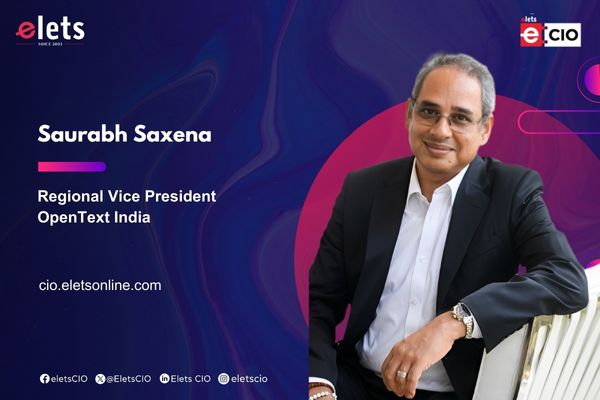
Views expressed by Saurabh Saxena, Regional Vice President, OpenText India
Be a part of Elets Collaborative Initiatives. Join Us for Upcoming Events and explore business opportunities. Like us on Facebook , connect with us on LinkedIn and follow us on Twitter.
"Exciting news! Elets technomedia is now on WhatsApp Channels Subscribe today by clicking the link and stay updated with the latest insights!" Click here!